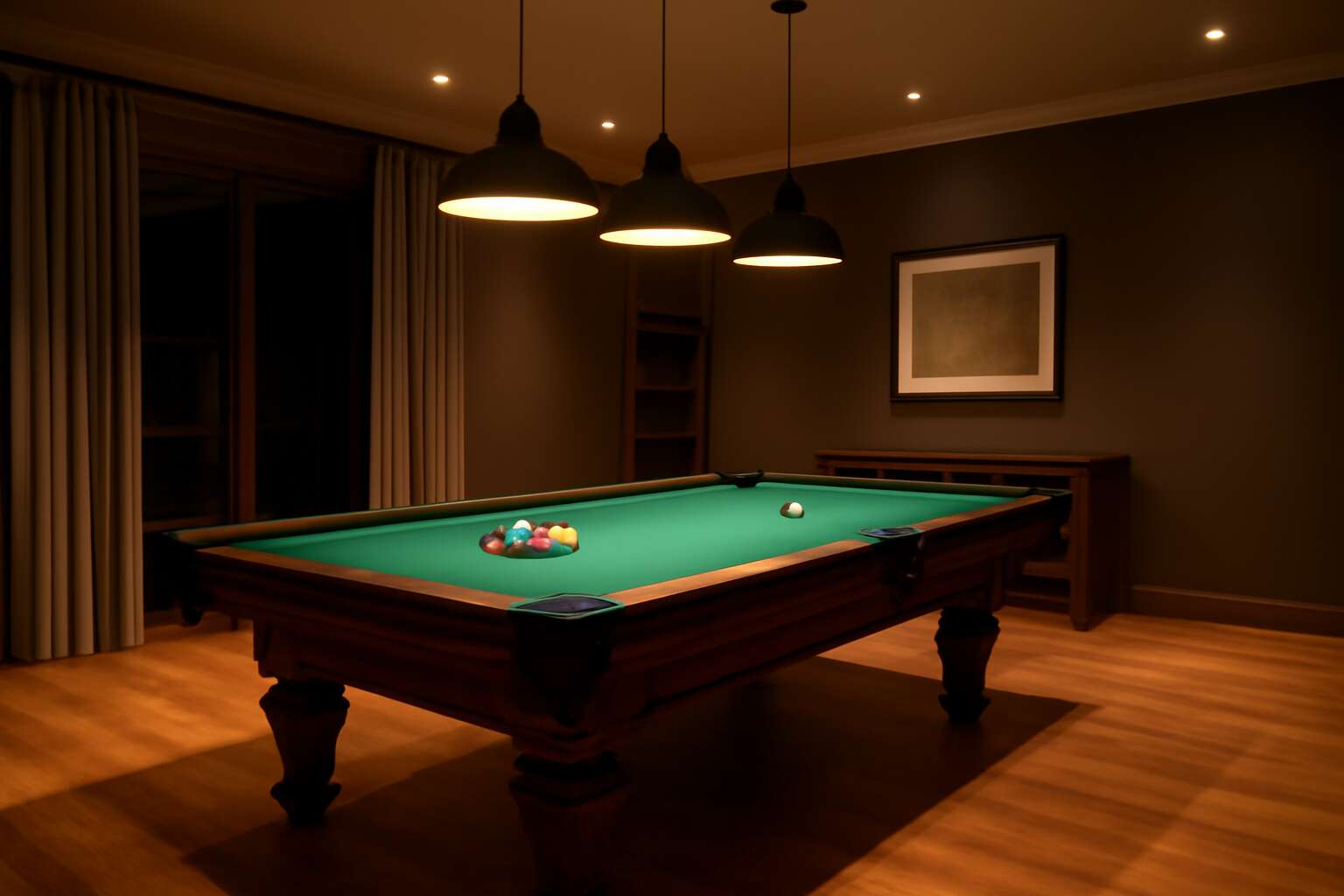
Room Size Essentials for a Pool Table
Standard table sizes and corresponding room footprints
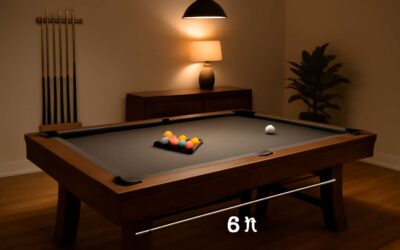
Room Size Essentials for a Pool Table are more art than arithmetic. In South African homes, the pool table room size shapes cue paths and social energy; a cramped corner stifles conversation and swagger. A standard table measures eight by four feet, and generous clearance around it preserves flow. For an 8-foot table, aim for roughly a 17-by-13-foot footprint (about 5.2 by 4.0 meters).
- 7-foot table: about 12.5 × 16 ft (3.8 × 4.9 m)
- 8-foot table: about 13 × 17 ft (4.0 × 5.2 m)
- 9-foot table: about 13.5 × 18 ft (4.1 × 5.5 m)
With those footprints in mind, keep seating and lighting balanced so the room breathes. The right room layout invites conversation and keeps the evening flowing without vanity or clatter.
Required clearance around the table
“Space is the real cue,” a designer once quipped, and in SA lounges the pool table room size defines the vibe more than the velvet pockets. It should breathe—aim for about 1.2–1.5 m (4–5 ft) of clearance around the table to keep shots honest and chatter loose.
Along with that open footprint, balance seating and lighting to avoid vanity or clatter.
- generous clearance around all sides
- seating that doesn’t crowd the cue path
- lighting that evenly illuminates the table
- adequate air and acoustics to keep chatter warm
Ultimately, the room thrives on space, energy, and the confident swagger that a well-sized pool table room size earns you.
Calculating usable floor area in square feet
Space is the soft engine of play, and in South African lounges the pool table room size can turn a quiet corner into a cathedral of light and leather. A well-defined footprint invites coppery laughter and clean lines across the slate, a spell that flatters both eye and cue.
To map usable floor area in square feet, measure length and width in feet and multiply—this yields the room’s total footprint. Subtract fixed furniture and architectural intrusions to reveal the actual playground for table and chatter. In practice, this number helps you compare a room’s potential against the table’s footprint and the space needed for shots and social ease.
- Footprint and overall room dimensions
- Total square feet of the room
- Usable play zone versus seating area
When the numbers align, the room breathes—an atmosphere of space, energy, and confident swagger that speaks to a true craftsman’s eye.
Common layout mistakes to avoid
The right pool table room size can turn a quiet lounge into a cathedral of light and leather, if the space breathes. Crisp energy makes shots flow and conversations stay classy.
Common layout mistakes to avoid creep in when space is misread.
- Cluttered sides leave no runway for a clean break.
- Table tucked into a corner, cue action strangled.
- Seating crowds the line of travel.
- Lighting creates glare or shadows rather than clarity.
Get a feel for balance; generous play area paired with social ease marks a room that respects the space and audience.
In South Africa, spaces like this blend sociability with sport.
Choosing the Right Pool Table Size for Your Space
Measuring your room accurately
“Space writes the score of every cue,” murmurs a seasoned designer, and the pool table room size determines the tempo of evenings. In South Africa, where sunlit verandahs meet compact lounges, the right footprint transforms a corner into a stage for conversation and precise carom. Measure with care, imagine cue strokes gliding past cushions, and let the table’s footprint harmonize with the room’s light and flow.
When balance reigns, movement remains effortless and furniture falls into place like characters in a gentle play. The space between rail and wall becomes a whisper, not a barrier, and rooms feel larger without losing warmth. That footprint invites social nights, quiet focus, and lasting memories, turning ordinary evenings into stories of light and motion.
Deciding between 7-foot, 8-foot, and 9-foot tables
Size is a cue all its own, as a designer once quipped: “The room will tell the story if the table fits.” When weighing pool table room size, the choice between 7-foot, 8-foot, and 9-foot tables goes beyond inches and becomes a rhythm of evenings—bolstering conversation, chasing carom, and keeping the furniture from staging a protest.
To tip the balance, consider a few broad factors:
- Ceiling height and vertical clearance for cueing action
- Traffic flow and surrounding furniture around the table
- Room shape, lighting, and focal points that shape ambiance
In South Africa’s sunlit lounges, the right footprint preserves warmth while keeping the game lively, regardless of 7-, 8-, or 9-foot aspirations.
Effect of cue length on required space
“The room will tell the story if the table fits,” a designer once quipped, and I hear that echo in every South African lounge I visit. The length of your cue isn’t just a tool; it’s a measure of space and pace. As cue length grows, so does the clearance behind and around the table, nudging furniture and shaping the evening’s conversation.
Choosing the right pool table room size isn’t only inches; it’s about how players flow and stories unfold in the space.
- Longer cues invite a wider arc for conversations and a calmer traffic flow.
- Shorter cues keep the room intimate, with fewer near-misses between lamp and shoulder.
- The balance between cue reach and room layout guides the room’s mood without shouting for attention.
In South Africa’s sunlit lounges, warmth and play can share the same footprint, turning each game into a memory.
Accounting for accessories and seating
Space is the silent partner of play—noisy in crowds, obedient in quiet moments. Choosing the right pool table room size isn’t merely about inches; it’s about how the room sways with the cue’s arc. In South Africa, this balance becomes a stage where conversation flows and the table breathes with the lounge.
- Seating footprint and clearance around the table for a smooth cue swing
- Accessory zones, including cue racks, chalk, and ball racks, that don’t crowd walkways
- Lighting alignment to minimize glare and keep the eye steady on the felt
Let the arrangement honor both function and whim—soft fabrics, warm lighting, and a path that invites players to gather without crowding the action. When the room listens to the table, every game becomes a memory stitched into the space.
Room Layout and Design Considerations
Flooring, lighting, and wall color impact on play
A startling stat lingers in SA homes: 68% of casual billiards sessions feel off because space and light conspire against focus. Room layout is more than geometry; it’s a quiet audition for precision. In this lens, pool table room size shapes every read and stroke!
Flooring, lighting, and wall color influence play far more than a mere footprint suggests. To align ambience with action, consider these elements:
- Flooring that absorbs noise and softens footfalls—carpet or underlays help keep tempo steady.
- Lighting that is even, glare-free, and warmly tinted, so pockets and cloth read true.
- Wall color providing gentle contrast to the cloth, reducing eye strain.
In essence, the room breathes through its pool table room size, where mood and measured space converge into a theatre for every break.
Wall clearance and rail visibility
A quiet stat still lingers in SA homes: 68% of casual billiards sessions feel off when space and light conspire against focus. Room layout is more than geometry; it’s a silent audition for precision. In this lens, pool table room size shapes every read and stroke.
Wall clearance and rail visibility aren’t cosmetic; they’re the invisible teammates that keep shots honest.
- Clearance around the table to avoid obstructed backswing
- Rail visibility that preserves reading line-offs toward pockets
- Sightlines that maintain cloth contrast and pocket alignment
With the room breathing and the cues singing, the ambience and measured space converge into a theatre for every break. When the room is right, even a casual game feels championship-bound.
Doorways, cabinets, and traffic flow around the table
In SA homes, 68% of casual billiards sessions feel off when doorway and traffic dynamics collide with the table. Room layout and design considerations matter more than ornamentation; they script the tempo of a break and the ease of a read. Doorways, cabinets, and traffic flow around the table shape how players move, where the cue glides, and how the cloth reveals its truth. The pool table room size you carve out becomes the room’s quiet conductor.
- Doorway width and clearance for backswing and cue travel
- Cabinet placement, ensuring doors do not intrude on stroke paths
- Traffic flow enabling smooth transitions between shots, seating, and chalk
- Clear sightlines that avoid visual clutter and maintain game rhythm
Measured space invites concentration and conversation, turning a casual game into a considered performance.
Placement of seating and spectators
Across SA, 68% of casual billiards sessions feel off when seating and sightlines collide. Room layout tweaks turn that stat around, shaping the tempo of the break and the ease of a read. The pool table room size you carve out becomes the room’s quiet conductor.
Placement matters. Consider where spectators sit, so conversation fuels the game without crowding the cue path. A thoughtful arrangement keeps the focus on the table while inviting warm chatter from the porch light to the chalk box.
Smart seating planning invites concentration and warmth, turning an ordinary night into a considered performance around the table.
Practical Math and Tools for Planning
Space calculation formulas for different table sizes
Space is the silent cue that guides every stroke. In the pool table room size, the room’s dimensions sculpt possibility, turning a shy arc into a confident strike. A room sized with care lets the cue breathe and the spectator’s gaze settle in perfect rhythm. Practical math becomes a compass, turning uncertainty into quiet, architectural poetry.
- Footprint formula: Length = L_table + 2C and Width = W_table + 2C, all in feet, with C as the total clearance you want on each side.
- Apply to 7′, 8′, and 9′ models by substituting the table’s playing dimensions (L_table, W_table) into the same pair of equations.
- Unit check: keep units consistent; convert to meters if needed (1 ft ≈ 0.305 m).
These calculations stay ready in the pocket of your planning—subtle tools you carry from room to room, quiet as a metronome, shaping the environment without shouting. They braid with memory of doors and light, keeping the game lush and the space thoughtful.
Using online room size calculators
“Space is the quiet partner of every shot,” a veteran player once told me, and that line keeps echoing in my mind. Practical math meets planning when online room size calculators map the space around a table.
Knowing the footprint comes into view as dimensions and clearance are considered, and the calculator reveals the space at a glance. In South Africa’s sunlit lounges, this simple check lets the pool table room size breathe—turning uncertain corners into confident lines and calm corners into purposeful flow.
We lean on a few reliable tools to translate numbers into space. Here are quick examples:
- Online room size calculators
- AR measurement apps
- Floor plan software
With these aids, guidance arrives as easily as a steady refrain—helping seating, lighting, and walls align with the table’s footprint while keeping the room’s character intact.
Creating a simple floor plan grid
‘Space is the quiet partner of every shot,’ a veteran player once whispered, and that line keeps echoing in my notebook. When I map pool table room size, practical math becomes planning—footprints turn into confident lines and corners into calm flow. In South Africa, that simple mapping lets sunlit lounges breathe and keeps play in focus.
Creating a simple floor plan grid helps translate measurements into usable space. I sketch a tidy grid, marking the table’s footprint and pathways, then test sightlines and movement at a glance. To aid the process, consider these tools:
- Online room size calculators
- AR measurement apps
- Floor plan software
With that grid in hand, the pool table room size feels deliberate, balancing seating, lighting, and wall space so the table owns the room without crowding it.
Tips to avoid measurement errors
Practical math is the quiet engine behind a room that respects both play and conversation. Footprints become confident lines, and corners manage themselves when measurements tell the story of space. In South Africa, where sunlit lounges meet carved wooden cues, the idea of pool table room size guides design with calm certainty. I’ve learned that small arithmetic—lengths, angles, clearance—keeps the room legible at a glance.
To minimize measurement errors, treat planning as a collaboration between numbers and intuition. Think of tools as quiet partners: they don’t replace the eye, they confirm it.
- AR measurement apps
- Floor plan software
- Online room size calculators

0 Comments