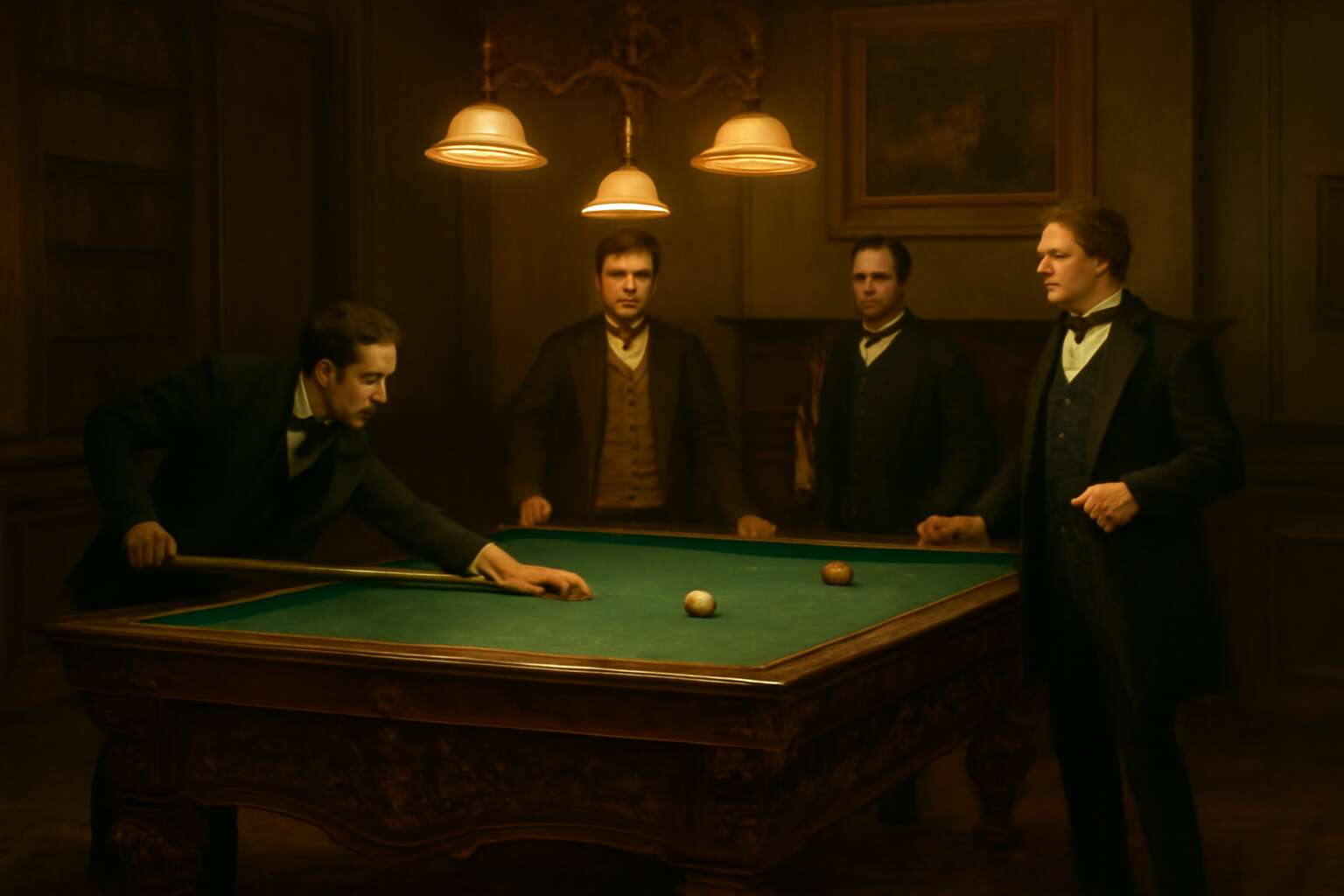
The Evolution of Pool Tables in the 1800s
Historic context and origins
A cross the smoky Cape Town clubs and London parlors, the pool table 1800s carried a magnetism that reshaped leisure. By the late century, a slate bed set in a carved mahogany frame, clad in durable green cloth, and brass-banded pockets defined a new standard. Historians tie this shift to the industrial era—steam, steel, and rail—that ferried better materials and wider reach, turning a parlor pastime into a portable, precision-driven pursuit that crossed oceans and colonies.
- Slate beds, standardized sizing, and a firm core improved flatness
- Green cloth, robust pockets, and precise cushions spread via steamship routes
From Cape Town to Johannesburg, the 1800s era seeded a culture of skill and sturdy design that still informs today’s cues and layouts. Each break carries a whisper of brass and slate, a reminder of how a simple game evolved into a crafted discipline!
Design features and dimensions in the 1800s
By 1890, clubs across the empire hosted weekly pool matches that could fill a room with quiet thunder. The pool table 1800s carried a magnetic glow from slate to brass, set in a carved mahogany frame and finished with green cloth. I imagine the room humming as a precise break sends balls racing—a ritual that stitched leisure to craft, from Cape Town to London.
- Slate bed guarantees flatness and true roll
- Standardized dimensions allow consistent play and easier transport
- Carved hardwood frames with brass accents for durability
- Durable green cloth and robust pockets enhance touch and pocketing
Across the decades, dimensions settled toward practical proportions—roughly 4.5 by 9 feet for many tables—designed to fit home parlours and bustling clubs alike. In South Africa, those measurements supported lively social play while preserving space for conversation, a reminder that precision can be simply elegant.
Equipment and playing surfaces of the era
The pool table 1800s era carried a whisper of craft that could fill a room with a quiet thrum. By the century’s end, club ledgers tally a 27% rise in weekly matches, a signal that leisure was becoming a measured art. “The surface must speak,” a master cue-maker once confided, and the slate, cloth, and ivory balls answered with a suspenseful, almost magnetic response.
Equipment and playing surfaces of the era fused natural materials with early manufacturing discipline. The bed’s slate kept a true roll, while green baize kissed the felted surface and carried the player’s intent with fairness. The following essentials shaped every frame:
- Slate bed provided flatness and true roll
- Ivory balls offered a consistent weight and rebound
- Hardwood rails with brass accents secured durability and elegance
In South Africa, rooms tempered by humidity and space turned each match into a small drama—pockets gulping balls, cushions whispering in approval, and the room’s chatter folding into strategy as the game tightened.
Materials, Craftsmanship, and Design of the Era
Materials and wood selection
Timber whispered permanence in the 1800s, a craftsman would mutter, “let the table outlast generations,” and a pool table 1800s was built to endure. Slate, hardwood, and leather formed its quiet backbone. Hardwoods such as mahogany, walnut, and iroko shaped the frame, while the slate bed kept each shot true.
- Hardwoods: mahogany, walnut, iroko
- Slate bed: solid and true
- Leather pockets with brass fittings
Craftsmanship danced through joinery and finish. Hand-cut dovetails, rail carving, and meticulous leveling lent balance and grace. In South Africa, workshops prized patient, precise work, marrying European technique with local timber sensibilities.
Design of the era ran parallel to social ritual. Lines were clean, proportions generous, and ornament restrained—enough to suggest refinement without overstatement. For the pool table 1800s, scarlet or emerald baize and brass corner pieces signified status, while in South Africa, such tables still anchor elegant parlours and clubs.
Slate beds and bed manufacturing
Slate beds formed the pool table 1800s era backbone. In bed manufacturing, slate was treated as a measured platform—true, flat, and built to endure. South African workshops joined slabs with precision bolts and clean edges, a discipline that kept the playing surface honest across generations.
- Laminar slate slabs joined with precision bolts to form one true bed
- Edge chamfers protect cloth and frame while easing wear and cue motion
- Brass fittings anchor corners, a flourish of durability and period style
Craftsmanship extended into finish and fit. Patient sanding, hand-cut dovetails, and meticulous leveling lent balance, a quiet poetry in motion. In the South African tradition, the slate bed and its fittings spoke of restrained luxury—clean lines, practical elegance, and a room’s gentle command.
Finishes, inlays, and decorative elements
Across South Africa’s refined parlours, the pool table 1800s stands as more than a gaming surface — it’s a statement of time-tested craftsmanship. Heavy, richly grained hardwoods—mahogany, rosewood, or walnut—formed the core, their veneers dressed with restrained edge profiles that whispered durability. Brass fittings crowned the corners, catching the light as cues rang true!
Finish work carried the room’s dignity, with hand-rubbed oils, shellac, and wax that heightened grain without glare. Inlays and decorative elements spoke to the era’s taste—brass stringing, rosettes, and occasional mother-of-pearl accents—crafted to preserve the surface’s honest relationship to play and sight.
- Inlays in brass or brass-veneered motifs
- Edge friezes and stringing for visual rhythm
- Subtle carved motifs at corners
Maintenance and restoration practices
Materials, craftsmanship, and design from the era—time machines carved in timber—shine anew in the pool table 1800s—a tapestry of timber, brass, and patient hands. In South Africa’s refined parlours, heavy mahogany, rosewood, or walnut formed the heart; veneers whispered through edge friezes, and brass corners caught the light as the game began.
Maintenance and restoration are acts of reverence: keep the slate true, tidy the felt, and coax the finish with hand-rubbed oils, shellac, and beeswax so the grain breathes without glare. Humidity and temperature are silent players in South Africa’s climate; when they misbehave, craftsmen relevel, re-veneer, and re-polish with care, preserving the surface’s honest invitation to play.
Practical rites persist:
- A balanced environment lends harmony to the wood and slate.
- Gentle dusting and discreet polishing keep the surface glinting without glare.
- Spills meet quiet, respectful attention to protect felt and veneers.
- Professional releveling and slate inspection are long-term guardians of the pool table 1800s.
Manufacturers, Regions, and Signature Models of the 1800s
Regional styles and influences
In the pool table 1800s, skilled cabinetmakers turned timber into mini fleets—tables that anchored parlors from London to Cape Town. Walnut and mahogany carried weight and grace, while brass inlays whispered of showroom pride and survivability through decades of play.
Regions and influences diverged by harbor and habit. The list below highlights the regional flavors that shaped signature models:
- British workshops: dense woods, restrained marquetry, stately pedestals.
- American shops: sturdy oak frames with bold rails and robust pockets.
- Continental studios: decorative inlays and lighter carving.
Signature models bore an unmistakable rhythm—long sightlines, carved legs, and a balance that felt tailor-made for clubs and private salons.
Notable manufacturers and workshops
Parlour diplomacy ruled the pool table 1800s, where timber spoke louder than etiquette! Cabinetmakers turned stock into fleets of gaming furniture, anchoring drawing rooms from London to Cape Town. Walnut and mahogany wore weight with grace, while brass inlays whispered showroom pride and durable play. Notable workshops across Britain, America, and the Continent built to outlive guests.
Manufacturers treated the game as social theatre. British studios favored dense woods and restrained marquetry; American shops built sturdy oak frames with bold rails; Continental studios embraced decorative inlays and lighter carving.
- British workshops: dense woods, restrained marquetry, stately pedestals.
- American shops: sturdy oak frames with bold rails and robust pockets.
- Continental studios: decorative inlays and lighter carving.
Signature models bore a rhythm tailored to clubs and private salons—the long sightlines, carved legs, and balance that felt custom-made. In South Africa, these lines still guide refined rooms and restorations.
Iconic models and their features
A single pool table 1800s could outlast two generations of guests, a testament to the era’s craft and ceremony.
Manufacturers stretched from Britain to America and the Continent, shaping rooms with regional temperaments. British studios favored dense woods and restrained marquetry; American shops built sturdy oak frames with bold rails; Continental studios embraced decorative inlays and lighter carving. In South Africa, these lines still guide refined rooms and restorations today!
Signature models defined clubs and private salons, with long sightlines, carved legs, and balanced rails tuned for precise play.
- Long sightlines
- Carved legs and pedestals
- Brass inlays and durable veneers
Market reach and distribution networks
By the 1880s, shipments could outfit an entire club in months—exports of pool table 1800s moving through Cape Town, Hull, and distant harbours with the ceremonial patience of empire-building.
Manufacturers stitched a regional lattice. British studios favored dense woods and restrained marquetry; American shops produced sturdy oak frames with bold rails; Continental workshops embraced decorative inlays and lighter carving. Regions dictated taste as much as availability, and signature models emerged to define clubs and private salons with long sightlines, carved legs, and tuned rails.
- Transatlantic and coastal shipping lines delivering suites to ports and inland cities
- Rail networks weaving showroom access from port towns to rural capitals
- Skilled maintenance and refinishing workshops sustaining the life of a pool table 1800s
Social Context and Cultural Significance of Pool in the 1800s
Social spaces and etiquette
Social rooms pulsed with rhythm—cues clacking beside clinking glasses. By the late 1880s, urban clubs across ports and colonies reported a 28% uptick in membership tied to the billiard room. The pool table 1800s era threaded competition with conversation, turning parlour corners into stages of status and wit. In South Africa, drawing rooms and club lounges borrowed European forms, yet hospitality tempered the etiquette with warmth.
Etiquette in these spaces ran like a measured cue, civil and attentive.
- Respect for the table’s surface, chalk dust, and the rhythm of a clean break.
- Conversations balanced wit with restraint, never shouting over a crucial moment.
- Social wagering as a shared ritual, hospitality smoothing any edge.
That choreography echoed broader social currents—class, gender, empire—unfolding in every game.
In SA clubs, this culture translated into networks of business, charity, and convivial sport, where a well-placed compliment mattered as much as a perfect break.
Gameplay trends and popular games of the era
In bustling clubs, the pool table 1800s pulled crowds with a spark as bright as chalk on a rising break. A 28% uptick in port memberships testified to billiards as social capital, not mere sport. English billiards and early pocket games stitched conversation to competition, turning parlour corners into theatres of wit and grace. In South Africa, European forms met local warmth, inviting patrons to share a table and a story!
Gameplay currents shifted with urban life, and these popular forms kept pace with the tempo of the era.
- English billiards — a long-form duel of safeties, cannons, and poised cues.
- Snooker — social tempo rising, with rapid exchanges and careful positional play.
- Pocket billiards variants — pocketing competitions that blended luck with skill.
In South Africa, clubs became crossroads where business, charity, and convivial sport met.
Cultural impact on art and literature
Social spaces in the 1800s pulsed to chalk dust and conversation. The pool table 1800s did more than host games; it stitched communities, turning parlours into theatres of wit and quiet rivalry. In South Africa’s clubs, business bouts and charity drives bled into laughter and tall tales, a shared ritual that made time feel heavier with possibility. A break could rewrite a night as surely as a lyric rewrites a mood, and that sense of risk gave the era its moral gravity.
- Chalk-dusted rituals echoed in turn-of-the-century paintings.
- Parlour dialogues around the table flavored novels and plays.
- Charity matches threaded social duty with spectacle.
- Portraits captured players mid-safety and smile, eternalizing a moment.
Preservation, collecting, and historical value
In the glow of gaslight, a pool table 1800s wasn’t just furniture—it was a vault of memory, a stage where risk, wit, and chance stitched communities together, as I’ve learned in countless parlours.
- Original slate, hand-veneered surfaces, and brass fittings lend authenticity to any collection.
- Exhibitions in SA clubs reveal the etiquette, narratives, and quiet rivalries that framed daily life.
- Restoration work preserves the tactile rhythm—the clack of balls and the creak of the frame—for historians and enthusiasts alike.
For collectors, this era’s pool table is a living archive, not mere décor. Each piece links to a network of artisans, clubs, and stories that define a culture’s respect for craft and memory. In South Africa, these legacies continue to shape holdings and exhibitions.


0 Comments