Why Combine a Pool Table with Dining Furniture
Maximizing Small Spaces with Two-in-One Functionality
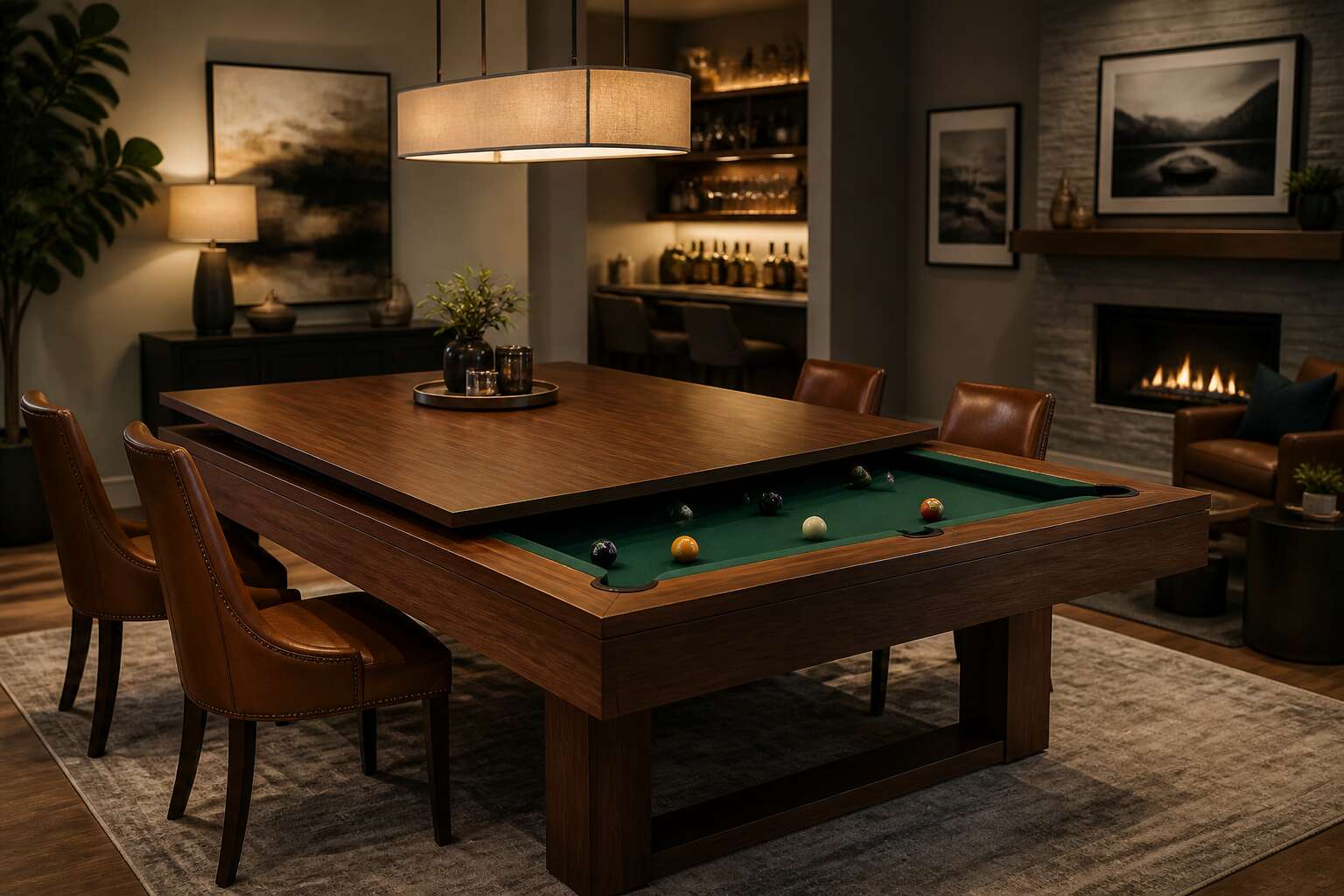
A single room in a Johannesburg apartment often juggles three lives: a lounge, a workspace, and a dining area. Enter the pool table dining top, a piece of furniture that refuses to choose just one identity. This clever hybrid transforms a standard billiard surface into a proper dinner table in under a minute, which changes how you use every square metre of your home. I have seen guests marvel at the smooth flip mechanism, and honestly, the practicality is hard to beat.
For those weighing the purchase, consider what this dual purpose actually delivers:
– It eliminates the need for a separate dining suite, freeing up floor space for other uses.
– It protects the baize from spills and scratches when the top is closed.
– It keeps the game ready at all times, no storage required.
Beyond the obvious space savings, the design encourages more social interaction. You can host a braai indoors, then transition to a friendly match without moving furniture. The pool table dining top does not compromise on play quality either, as modern hinges and locking systems keep the playing surface level and true. For South Africans living in compact townhouses or granny flats, this piece offers a rare blend of leisure and necessity. It is not a gimmick; it is a deliberate solution to the daily puzzle of limited space.
The Social Appeal of a Game Room Meets Dining Area
I have hosted dinners where the real competition began after dessert. In South African homes, the conversation often drifts toward the table itself, especially when that table hides a full billiard surface beneath its polished top. A pool table dining top turns an ordinary evening into an unfolding event. Guests push back their chairs, the cover lifts, and the room shifts from a place of plated courses to a space for friendly rivalry.
- It creates a natural second act for gatherings, no one has to relocate.
- The dining surface becomes a conversation piece before the first shot is played.
- It bridges generations, parents and children find common ground over a frame of billiards.
This combination answers a simple question about hospitality. Why should the meal and the game live in separate rooms? The pool table dining top keeps everyone together, the laughter, the banter, and the gentle clack of balls all happen in one shared space. For anyone who loves hosting, this piece anchors the evening without demanding a separate game room.
How a Convertible Table Adds Value to Your Home
Most dining tables sit idle for twenty two hours a day. A pool table dining top does not! Combining a pool table with dining furniture is an exercise in practical cunning. One piece of furniture performs two distinct duties, and neither job is diminished. The table hosts a Sunday lunch and then, with the cover lifted, hosts a serious frame of billiards.
How does a convertible table add value? A traditional dining suite occupies floor space and does little else. A pool table dining top replaces that suite and eliminates the need for a separate game room. That adds utility to the square meterage you already own. The financial angle is simple:
- It reduces the cost of furnishing two separate areas.
- It increases the versatility of one room.
- It becomes a selling point when you list your property.
The value also lives in the option itself. You get to play a game without turning your home into a clubhouse.
Essential Factors When Selecting a Convertible Table
Choosing the Right Size for Your Dining Area and Pool Play
The average dining table hosts a meal for two hours a day but hogs the room for the other twenty-two. A pool table dining top flips that idle real estate into a game zone. The first mistake buyers make is obsessing over table dimensions alone. You must account for the cue swing.
- Measure the room, not the table.
- Subtract the table size from the room size.
- Keep at least 58 inches of clearance for a standard cue.
If your dining area is 12 by 14 feet, a 7 foot table leaves 3.5 feet on each side. A 9 foot tournament style table in that space means broken cues. For compact spaces, a 6 foot model sacrifices a little playing surface for a better fit. A pool table dining top should serve both purposes without turning a meal into a game of elbows.
Understanding Weight and Sturdiness for Dining Safety
A convertible table’s weight is its hidden compromise. Too light, and a pool table dining top shifts when guests lean on it. Too heavy, and moving it becomes a chore. For dining safety, the frame and hinges matter more than the playing surface. A solid hardwood base with reinforced steel brackets prevents wobble during a meal. The top must sit flush with the rails, leaving no gaps for cutlery to slip into. The mechanism that raises and lowers the cover varies. Gas struts offer smooth operation, while manual latches demand a firm hand. The weight distribution across the legs determines stability. A table that tips under pressure fails its primary purpose.
Three details decide the outcome:
- Leg width and cross bracing
- Hinge material and weld quality
- Surface thickness when closed
A pool table dining top only earns its space if it feels as stable as a standard dining table.
Selecting Materials That with Stand Humidity and Heavy Use
The sea air in Durban or Cape Town corrodes furniture. I have seen dining chairs rot while their owners blame the carpenter. A pool table dining top must withstand this assault. Choose marine grade plywood or kiln dried hardwoods like maple or oak. These materials resist warping when evening mist creeps through open windows.
The finish matters as much as the timber. Lacquers and polyurethanes create a barrier against damp, but they wear thin under the weight of dinner plates and spilled red wine. I prefer a phenolic resin surface. It endures the scrape of cutlery and the slow creep of humidity.
Consider the joinery:
- Dovetail joints hold where screws loosen.
- Brass hinges resist rust better than steel.
- Sealed edges keep moisture from the core.
A pool table dining top that ignores these details will swell, crack, and betray you. Choose materials that accept daily use and coastal weather.
Considering a Coved Table Leveling System and Cloth Durability
A convertible table’s leveling system determines trust. When the coved leveling system fails, the slate shifts, the ball deflects, and the dinner wine trembles. You notice it in the hesitation of a guest’s hand. Cloth durability is existential. A cheap cloth pills and tears under daily use, turning a noble surface into a degraded patch. Consider these points:
- Check for self-leveling mechanisms for uneven floors.
- Invest in worsted wool cloth.
The pool table dining top requires engineering that accommodates your foundation’s flaws. Use a floating slate assembly that absorbs heavy meal stress. Do not ignore the cloth’s snap. A taut weave endures the slide of a ball and the scrape of a plate. Choose a leveling system with accessible adjustment points, because your floor shifts with seasons. The true test is not the first game, but the hundredth dinner.
Design Options and Material Choices for Dual-Use Tables
Traditional Wood Finishes vs. Modern Slate-and-Metal Looks
Choosing the right look for a pool table dining top often feels like picking between two design languages. Traditional wood finishes, such as oak or walnut, bring warmth and a classic clubhouse character. These surfaces hide scratches from daily dining remarkably well, and they pair naturally with farmhouse or colonial interiors. In contrast, modern slate-and-metal looks offer a crisp, industrial edge. Powder-coated frames and matte slate surfaces resist fingerprints and read as contemporary furniture, not just game equipment.
What matters is how the material interacts with your room. Wood tends to absorb ambient light, making a space feel intimate. Metal and slate reflect it, brightening smaller areas. I have seen dual-use tables where the top is a hybrid: a wood rim with a slate center. That option gives you the best of both. Consider these practical distinctions:
- Wood requires periodic oiling but hides wear.
- Slate needs no finishing, though it chips if struck hard.
- Metal frames offer adjustable feet for uneven floors.
Your decision should hinge on the dining atmosphere you want, not just the game performance. A pool table dining top with traditional wood invites long meals. A slate-and-metal version signals a sharper, more versatile lifestyle.
Protective Dining Covers and Inserts Styles
Owners rarely consider the quiet moment after dinner, when the cover comes off. A pool table dining top asks you to choose what matters more: the felt’s silence or the table’s utility. Protective dining covers range from vinyl with felt backing to waxed canvas stitched for resilience. Each material changes how you host and how you clean.
Inserts offer another path. A rigid birch or tempered glass panel sits flush, requiring no storage and protecting the cloth from spills. Hinged variants fold onto themselves, while drop-in versions rest on wooden blocks. I have seen households rotate three covers, rotating function like seasons.
- Zero-clearance inserts keep cutlery stable
- Felt-backed covers mute plate clatter
- Tempered glass resists warping in humidity
In South African homes, where verandas blur into living rooms, the insert’s weight matters more than its finish. A cover that resists sun fading deserves attention. Ultimately, your pool table dining top should reflect how generously you pour wine, not how often you play nine-ball.
Built-in Cup Holders and Storage Solutions
Most dual-use tables treat cup holders as an afterthought. That is a mistake. A built-in cup holder with a rubber gasket does more than hold a glass. It protects the cloth from condensation rings and stops a toppling glass during a dinner party. In Johannesburg homes, where load shedding means candlelit meals, I have seen a stable cup holder become essential.
Storage solutions matter equally. A pool table dining top with a hidden drawer for cues and balls keeps the room functional. Some designs use a flip-up section with foam-lined slots. Others offer a slide-out tray beneath the slate.
- Corner cup holders with removable inserts for easy cleaning
- Magnetic closures on storage compartments to prevent rattling
- Ventilated drawers for chalk and accessories
The best configurations anticipate the shift from dining to play. You want a pool table dining top that serves both moments without demanding a second room for your equipment.
Changing the Rail Width for Dining Comfort
Changing the rail width changes how a pool table dining top feels at dinner. Standard rails are narrow, built for cue clearance. For dining, wider rails give forearms a place to rest. I have tested tables with 10 cm rails; they feel like a proper table. Materials matter equally. Solid oak rails withstand Johannesburg humidity. Laminated rails resist scratches but lack warmth. A padded leather insert on the rail edge softens the hard slate boundary. This small addition makes a real difference during a long meal.
Some manufacturers offer reversible rails on a pool table dining top. One side is flat for dining, the other is cushioned for play. A recessed rail profile keeps plates from sliding onto the cloth. It also prevents chalk dust from reaching your food. The best designs use a slight bevel on the inner edge.
– Wider rails support resting arms
– Padded edges prevent elbow soreness
– Recessed profiles protect the felt
Choose a rail width that suits your room. Narrow rails save space but punish dinner guests. Wider rails add comfort without sacrificing play quality.
Customizable Options for Fabric, Leather, and Tiles
A pool table dining top can feel like a compromise, but the right surface materials turn it into a statement. In Johannesburg, where design tastes range from industrial loft to classic homestead, the choice of fabric, leather, or tile defines the room. Wool blend cloth offers a soft, formal dining feel, yet it demands careful cleaning. Leather wipes clean easily and ages beautifully with use. For a more robust option, porcelain tiles resist heat and spills, though they add weight. Consider these customization paths:
- Leather inlays for a warm, tactile dining surface
- Tile inserts for durability and easy maintenance
- Fabric panels that match your interior palette
Each material changes the playing experience minimally if the pool table dining top uses a recessed cover. Choose what suits your lifestyle, not the showroom look alone. A well chosen surface elevates both meals and matches, making the dual purpose feel effortless.
Step-by-Step Guide to Transforming Your Table
Assessing Space and Setup Requirements before Conversion
Before anything else, prepare the room. Move out the old furniture and create an unobstructed corridor from the entrance to the intended spot. The pool table dining top arrives as a single unit, so you need a path that accommodates its full dimensions.
- Measure the height of each doorway, because a few centimeters can make or break the delivery.
- Check the swing radius of nearby doors to avoid accidental bumps during installation.
- Identify the location of electrical outlets, as some dining tops include lighting or charging ports.
Setup requirements extend to the ceiling. Pendant lights and fans often hang too low for cue strokes, so raise or remove them first. Also, verify the floor has no steep slopes. A subtle incline that goes unnoticed while dining becomes a real problem during a game. Assessing these elements now prevents awkward surprises later.
Securing the Dining Top Attachment and Avoiding Movement
Once the room breathes clear, the pool table dining top waits for its ritual of settlement. Align the oversized leaf over the slate, letting the edges seat against the rails perfectly. Lower the heavy lid gently, watching for the alignment pins to find their depths.
Now secure the attachment. Follow this sequence for torque and balance:
- Seat the hinge pins into the pre-drilled sockets.
- Turn the cam locks diagonally, drawing the frame tight.
- Fix the safety brackets at the corners.
- Test the seam for flushness.
Movement is the betrayer. A shifting top turns a grand game into a shaking travesty. Check the rubber footings. If they shift, shim them with thin leather washers. The rigid frame must sit mute beneath the cloth, holding its position against the evening’s bustle. A secure top is a silent partner in every feast and every faultless break.
Ensuring a Level Playing Surface after Removal
Remove the pool table dining top, andthe table transforms into its original identity. What remains is the slate bed, waiting for scrutiny. A playing surface hidden by leaves and covers now demands precision.
Begin with a spirit level across the length and width. The bubble must rest inside its ring. If it strays, adjust the leg levellers one foot at a time. Small turns yield steady results. Recheck until the surface calms, because a slope corrupts every shot.
- Run the level from the head end to the foot end.
- Roll a ball along each rail to detect banked drift.
- Press each cushion nose to verify consistent tension.
After each adjustment, let the ball travel again. Straight lines confirm true geometry. The cloth’s surface must feel taut under your fingers. Loose areas produce dead rebounds. This ritual, repeated after every removal, keeps the game consistent.
Storing Dining Accessories when Transitioning to Billiards
Transitioning from dinner parties to a serious match requires more than lifting off the top. A torn pocket or scratched leather cover can ruin the evening before the first break. I always treat the dining accessories as I treat the cue tips: with deliberate care.
Start by clearing the table of all items, from condiments to decorative pieces. Store them in a designated bin with soft dividers. Then fold the protective cover along its seams and place it in a moisture proof bag. For leaves, stack them vertically against a padded wall, using foam spacers between each slab. Cup holders should be cleaned and dried before nesting in their storage tray.
- Remove and wipe down each dining accessory
- Place fabric items in airtight containers
- Stack leaves vertically with edge guards
- Slide the storage bin under a sideboard
Before you attach the cover to the pool table dining top, dust the surface with a microfiber cloth to prevent scratches. A quick once over with wood polish keeps it ready for the next meal, while the slate billiards surface stays pristine underneath. This dance between dual purposes becomes second nature without thanks.
Caring for Your Convertible Dining and Billiards Table
Cleaning and Protecting the Dining Surface without Causing Damage
A pool table dining top carries two histories on a single surface. The dinner plate leaves its own history: the ring of a wine glass, the scratched trajectory of a knife. Cleanup is an act of preservation. A damp microfibre cloth with a neutral pH cleaner lifts residue without attacking the lacquer. Ammonia and bleach will cloud the finish over months of use.
The felt beneath the top demands vigilance. Crumbs fall through seams, and the condensation from a water glass can migrate downward. When the dining top is removed for a game, these hidden intruders affect the roll of the ball. A cloth barrier acts as a shield between the plate and the baize. For many owners, the moment before lifting is a quiet ritual. The pause, the hands, the separation of top from table preserve the pool table dining top for its next role.
Maintaining the Cloth and Rail Scuffs during Regular Use
Rail scuffs arrive with the first dinner party. A chair pushed back, a serving tray angled too sharply, and the neoprene cushion carries a scar. The cloth demands a different discipline. Denim is the worst offender. A rough seam dragged across the baize lifts fibres permanently, and the roll of every ball changes along that line. The dry Highveld winter makes the baize brittle, so scuffs deepen faster in August.
For the pool table dining top, regular use means regular inspection. Run a hand along the rails each month. Feel for compressed rubber or exposed staples. These defects grow larger when the dining top presses down. The state of the cushions reveals the habits of the household.
- The rail nearest the serving station shows the most scuffs.
- The cloth near the dining top hinge wears thin first.
- The corner pockets catch the most debris.
The pool table dining top hides these marks during meals. Removal discloses them.
Seasonal Care for Wood and Metal Components
The Highveld winter dries cabinet timber while Durban’s humidity makes it swell. A pool table dining top copes with both, but the wood’s movement asks for attention. Cracks appear first at the mitre joints, so check those edges each September. Metal parts behave differently. Brass hinges tarnish faster in coastal air, and that is the warning sign I watch for.
The undercarriage holds the lock mechanism for the pool table dining top. Clean the steel rails with a dry cloth. A trace of rust shows where humidity reached bare steel. Wipe the hinges and the sliders that draw the two halves together. Do not oil the wood. Do not oil the bolts. Oil attracts dust, and the dust scratches the lacquer!
The seasonal routine only covers three metal components:
- the hinge pins at the back corners
- the lock pins at the front
- the leveling casters beneath the pedestal
Pro Tips for Keeping the Conversion Hardware Smooth
Every dining room has one guest who leans on the table. With a pool table dining top, that lean travels straight to the hinge pins. The mechanism feels it. So does the host, later, when the top refuses to fold.
Keeping the conversion hardware smooth is less about oil and more about attention. A dry cloth over the steel rails each month prevents the fine dust of Johannesburg from grinding into the sliders. The lock pins need a wipe, nothing more.
- Check the hinge pins at the back corners.
- Wipe the lock pins at the front.
- Run a dry cloth over the leveling casters.
That routine takes two minutes. A pool table dining top that moves cleanly is a small triumph, and it costs nothing but presence.
Smart Room Layouts for Multi-Function Spaces
Clearance Dimensions for Comfortable Seating and Cueing
Only one in three homes can dedicate a full room to billiards, which is why smart room layouts matter. A pool table dining top allows the same square footage to serve two purposes, but only if you plan clearance carefully. Measure the cue length, typically 58 inches, and add a few inches for the backswing. That radius dictates where seating can exist during play.
For multi-function spaces, separate the dining zone from the cueing zone using furniture placement. Chairs should slide completely under the table when closed, and the dining cover should sit flush with the rail. Keep at least 120 centimeters between the table edge and any fixed object to accommodate both seated diners and standing players.
- Allow 150 centimeters for full cue strokes
- Maintain 90 centimeters for chair pull out space
Test the layout by sitting, then standing, then miming a shot. A pool table dining top rewards those who respect its dual nature with fluid transitions between supper and a game.
Positioning Lighting Over the Table for Dining and Billiards
Most room plans treat lighting as an afterthought, yet a pool table dining top depends on it! In my experience, the fixture should serve both supper and the break shot. Hang pendant lamps directly above the centre of the table, roughly 70 to 80 centimetres from the cloth, so shadows never fall across the cue ball.
For dining, add a dimmer switch. For billiards, you want a bright, even glow across all six pockets. Consider the following layout:
- Mount lights at the table’s geometric centre
- Keep the switch within arm’s reach of the seated diner
- Use track lighting for narrow spaces
That same table works for dinner and a match when the overhead fixture is sized to the full playing surface.
Decorative Strategies to Blend the Table into Your Dining Decor
only.
In South African homes, the open-plan living area often serves as lounge, dining room,and game room. That arrangement demands intentional sightlines, not just furniture placement. A pool table dining top creates a natural anchor, but how you position it around the rest of the room determines whether it feels integrated or intrusive.
I usually recommend setting the table so adjacent sideboards or display shelves fall within easy reach. That keeps dining functional while leaving floor space for cue swings. For decor, treat theat table as another piece of cabinetry! Match its wood tone or metal finish to other furniture. A textured rug beneath defines the dining zoneand cuts echo. Use tablewarethat matches the room’s palette. Framed art can shift attention from the playing surface to the walls. These choices make the table feel part of the room, not an afterthought.
Multi-Purpose Furniture Pairings with Convertible Pool Tables
In a Johannesburg open-plan home, the pool table dining top can anchor the room or fight it. The secret lies in how you pair it with surrounding pieces. Place a slim console behind the seating side for plates, not pool cues. That simple choice preserves the cue corridor.
- Use benches that tuck fully under the table top.
- Choose chairs with castors for quick removal.
- Mount a wall rail for cue storage above a low sideboard.
These pairings keep the dining zone ready and the billiards zone unblocked. Treat the table as a pivot, not a hurdle, and the space flows around it.
Creating a Flexible Floor Plan for Gatherings and Game Days
The average dinner party lasts two hours;a game night stretches into four. A flexible floor plan adapts to both, without apology. In a Johannesburg open-plan dwelling, the pool table dining top acts as the room’s central element, but only if you give it enough open space. Instead of boxing it into a corner, allow an open zone on each side. Define the eating area with a low bench, not a bulky sideboard. Then create a lane for cues that mirrors the pathway to the kitchen,ensuring neither activity blocks the other. Consider these elements that support this setup:
- Chairs with slim legs that slide fully under the top.
- A narrow cart for condiments, on wheels.
- Floor lamps aimed away from the playing surface.
That way, gatherings spread naturally, and game days begin with a simple swivel of chairs.

0 Comments