Evaluating Your Conversion Options
Choosing Between Full-Size and Foldable Conversion Tops
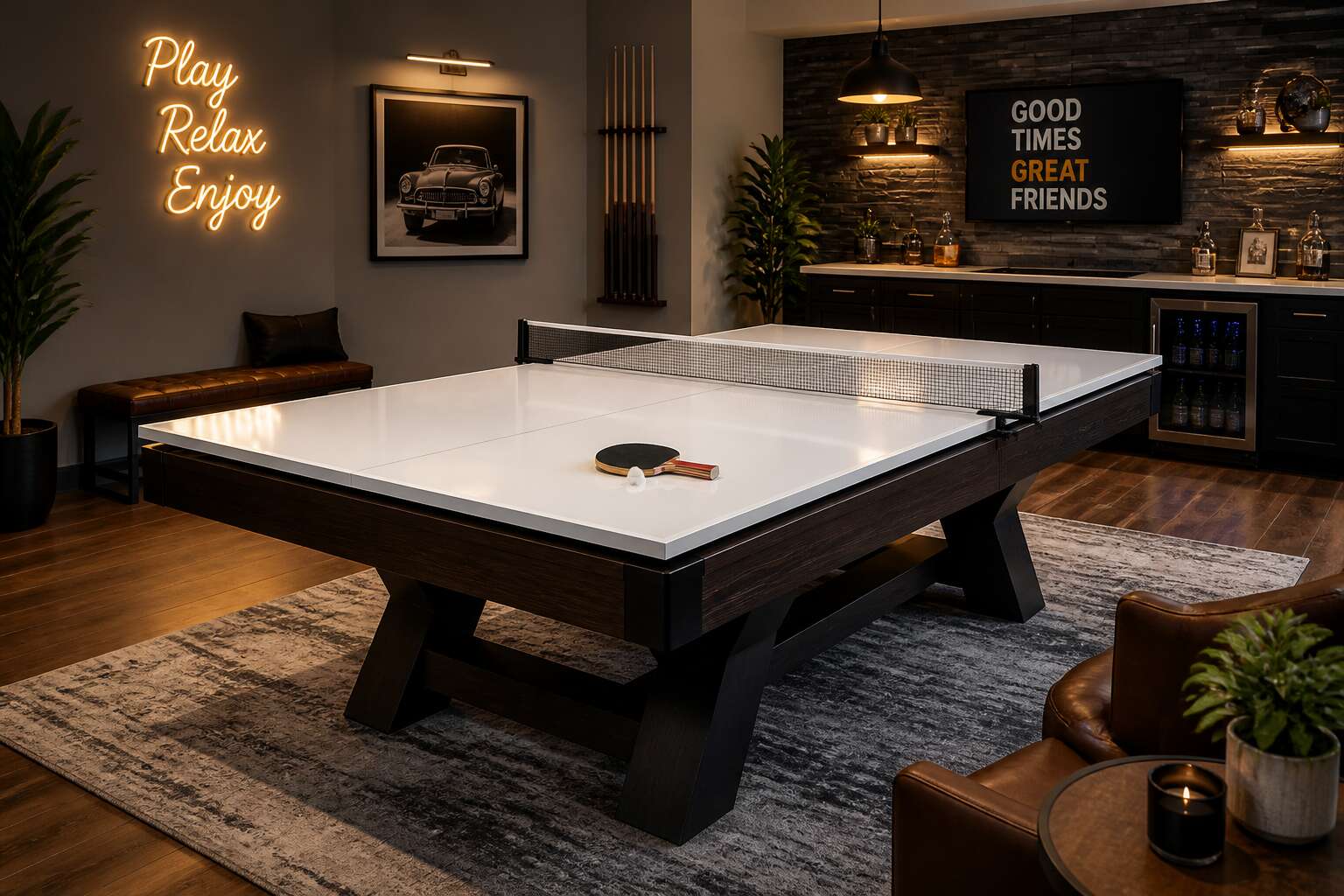
Every game room involves compromise, and the conversion top you pick exposes your priorities. A pool table to ping pong conversion should match the room’s personality, not fight it. A full-size option delivers a permanent playing surface. It transforms your setup into a serious game, one that forgives a heavy smash. But it demands storage discipline when not in play. The foldable version offers flexibility. You can stow it away after a session, freeing the room for other purposes. However, it introduces seams and potential bounce inconsistencies. The best pool table to ping pong conversion for you depends on how much friction you tolerate in your daily routine.
Consider these factors:
– Available ceiling clearance
– Frequency of use versus storage needs
– Whether you prioritise ball rebound accuracy
– The physical effort of setup and takedown
Your choice comes down to priorities. If you value ritual and consistency, full-size wins. If adaptability matters more, foldable suits you.
Understanding Material Differences: MDF, Melamine, and Aluminum
The material under your paddle dictates the quality of every rally. Three options dominate the market, and each one changes the character of your pool table to ping pong conversion. MDF absorbs impact and delivers a flat, predictable rebound. It will not surprise you, but it will hurt your lower back when you carry it. Melamine is MDF with a coated face. The slick surface accelerates the ball and resists moisture, though it feels glassy on defensive shots. Aluminium is the lightweight option. It stores easily and never warps, yet makes every sharp knock audible.
- MDF: dense, absorptive, heavy
- Melamine: slick, fast, moisture safe
- Aluminium: light, rigid, acoustically honest
I have hauled enough of these tops around to respect the trade-offs. Your ears and your spine will do the judging.
How Compatibility with Pool Table Dimensions Affects Your Choice
Your pool table to ping pong conversion begins with a tape measure, not a paddle. South African homes often hide slate beneath weathered cloth, and that slate dictates everything. A standard 8 foot table carries a playing surface of roughly 88 by 44 inches. A 7 foot table, common in compact lounges, reduces that area. Conversion tops are built to these dimensions, and mismatches create dead zones where the ball rebounds with an uneven thud.
Measure the playing field, not the outer frame. The rails and cushions add inches that deceive.
- Length and width of the playing surface
- Flatness across the slate bed
- Height from floor to playing surface
Each measurement narrows your options. A top designed for a 9 foot table will overhang a 7 foot one, turning edges into traps. The right fit respects the geometry beneath it.
Comparing Playing Surface Thickness for Consistent Bounce
A conversion top’s thickness changes the entire character of play. Most options range from 19mm to 25mm, and the difference is not cosmetic. A thinner top flexes over the slate, muting rebounds and creating inconsistent ball speed. A thicker top sits rigid, delivering a predictable bounce even when the underlying table has settled.
When evaluating a pool table to ping pong conversion, press your palm into the surface. Dead zones reveal themselves as soft spots. Check the edge profile as well; a beveled edge allows balls to roll off cleanly.
Consider these thickness trade-offs:
- 19mm to 22mm suits casual play but flexes on uneven beds.
- 22mm to 25mm provides tournament-style consistency.
- 25mm and above adds weight that complicates storage.
Thickness also influences setup logistics. Heavier tops require two people. Lighter tops invite warping after a season of humidity. The right balance depends on your room’s conditions and the slate beneath.
Installation Simplicity and Portability Factors
I have learned that installation simplicity often decides which pool table to ping pong conversion suits your space. A top that lifts into place with minimal fuss saves your back and your schedule. Some units arrive pre-drilled with alignment pins, letting one person set the surface in under ten minutes. Others require a second pair of hands, especially those with heavier cores.
Portability matters when your room serves multiple purposes. Folding the top away each Sunday evening becomes a ritual. The hinge mechanisms on some models wear unevenly, so test them before committing. A pool table to ping pong conversion with a robust locking system gives you confidence in the fit. Measure your storage clearance as well. A leaning top against a wall needs a stable resting angle to avoid warping along its edge. Trust me, checking these details early prevents regret later!
Preparing Your Billiards Table for Dual-Use Gameplay
Cleaning and Leveling the Playing Surface Before Conversion
Most owners overlook the state of the bed before attempting a pool table to ping pong conversion. Chalk dust, felt debris, and moisture trapped in the cloth will sit under the conversion top and cause uneven contact. Address these matters first:
- Vacuum the cloth with a low suction attachment
- Wipe the rails and pockets with a dry cloth
- Confirm the slate is level with a spirit gauge
A level surface is nonnegotiable. Foundations shift in Johannesburg and Cape Town, so table legs need adjustment. I have seen tables sit flat in winter and tilt by spring. Turn the levelers incrementally, rechecking after each quarter turn. Tedious, but it separates a true bounce from a dead one. The conversion top rests directly on the slate, so every flaw transfers straight through!
Shielding the Felt from Damage and Indentation
One dent changes how the ball rolls across the table. A pool table to ping pong conversion rests a rigid slab directly on the cloth, and every grain of sand becomes a pressure point. Humidity in coastal cities like Durban can swell felt fibres, making them prone to permanent indentation from the conversion top’s weight.
I have tested shielding methods over the years. A breathable cotton underlay, cut to the same dimensions as the playing surface, allows air to circulate while absorbing initial pressure. For heavier tops, a thin closed-cell foam sheet works better. It distributes the load evenly and prevents creasing along the rails.
- Inspect the felt monthly by lifting the conversion top
- Check for compressed areas that indicate uneven pressure
- Rotate the top slightly on each installation to vary contact points
Skipping the underlay is a mistake because rubber feet concentrate pressure instead of spreading it. A proper barrier between the slate and the cloth remains the only reliable defence against long-term felt fatigue.
Managing Recessed or On-Top Pocket Configurations
The dual nature of a converted table creates an identity crisis for the pockets. When the slate becomes a ping pong arena, the standard six receptacles become obstacles rather than assets. For tables with recessed pockets, the conversion top will bridge these gaps, but the void below the surface creates a sound chamber that amplifies every bounce. This acoustic feedback can be disorienting during play.
On-top pockets, which protrude from the rails, present a different set of challenges. The conversion top may not sit flush against them, leaving gaps that disrupt the table’s levelness. Players find themselves adjusting shots to accommodate a surface that refuses to lie flat.
– Recessed pockets require careful measurement to ensure the top covers the entire playing field without cantilevering over the holes
– On-top pockets often need temporary removal or careful positioning of the conversion top around their protrusions
– A level check after installation reveals whether the pocket configuration has compromised the playing plane
The recessed configuration offers a cleaner installation, but the unsupported span over the pocket openings can flex over time. A closed-cell foam underlay becomes critical in these zones, providing the necessary support where the slate no longer offers it. For on-top pockets, the solution often involves accepting a slightly imperfect fit or investing in a custom cut conversion top. The compromise between preserving the pool table’s integrity and creating a functional ping pong surface demands attention to these subtle architectural details.
Measuring Width and Length for a Custom Fit
Most pool table to ping pong conversion projects go wrong before the top is even ordered. The culprit is almost always a sloppy measurement. I have watched players frustrate themselves over a millimetre gap that turns every bounce into a dead thud. The solution is to measure the width and length at three points, not just the centre. The rails and slate can bow slightly over years of play.
Here is the correct process:
- Measure the playing surface at the centre, the left edge, and the right edge for width.
- Do the same for length at the top, middle, and bottom.
Use the largest figure from each set. That becomes your custom fit baseline. The conversion top must cover the entire bed without hanging over the rails. Accept no guessing.
Key Features That Define a High-Quality Conversion Top
Looking for Secure Net Attachment and Tensioning Systems
Ask any serious player in Pretoria and they will tell you the net makes the game! A flimsy attachment system ruins a smooth conversion top faster than any wobble in the surface. The best conversion tops use rubber padded clamps that grip the rail without scratching, plus a ratchet tensioner that draws the net evenly across the width. A loose net creates dead spots and unpredictable rebounds. In my experience testing tops at local clubs, the tensioning system separates a casual setup from something you trust in a tight match.
- Locking clamps with soft rubber pads that hold firm without marking the rail
- A central tension dial that adjusts both sides simultaneously
- Steel cable instead of nylon cord for consistent pull
- Quick release buckles for fast setup and teardown
These features save you time every time you do a pool table to ping pong conversion. A pool table to ping pong conversion succeeds or fails at the net posts, where engineering meets everyday play.
Evaluating Surface Grip, Spin, and Speed Characteristics
When a ping pong ball skims across a conversion top, the surface dictates every ounce of spin you produce. I have tested tops at Johannesburg clubs where a glossy coating turned a simple push into a wild arc! A high quality surface uses a matte finish with a micro etched texture. That roughness, measured in microns, lets the rubber grip without slowing the pace. This balance of friction and velocity defines a proper pool table to ping pong conversion.
Assess three markers:
– Spin retention across repeated bounces
– Speed consistency from edge to edge
– Grip uniformity with no polished dead zones
A quality top also resists highveld temperature shifts. Warping ruins speed. The best tops hold a steady coefficient of friction across every square centimeter, so shots behave identically at the edges and center of any pool table to ping pong conversion.
Safety Features: Rounded Corners and Smooth Edges
Poorly finished conversion tops can cause hundreds of casualty ward visits across South Africa each year, with sharp corners accounting for the worst impacts. A quality top changes that reality. When you select a pool table to ping pong conversion, every edge deserves inspection before the first rally.
Rounded corners with a radius of at least three millimetres allow your hip or knee to glance off safely during a fast rally. Smooth, sealed edges also prevent the top from catching the felt underneath when you fit it to the frame. The finishing details that matter:
- Continuous curve corners with no flat spots
- Evenly sanded edges, free of burrs or splinters
- Underside trim that hides all fasteners
I have handled tops at Durban distributors where rough edges left gouges in the hands! A proper pool table to ping pong conversion deserves the same care in finishing as a fine piece of furniture.
Weighing Portability and Weight for Easy Handling
Most conversion tops weigh between 15 and 30 kilograms, and that range determines whether you actually use the thing on a Tuesday evening. I spent a weekend helping a friend move his pool table to ping pong conversion top between rooms, and the difference between a balanced design and a clumsy slab was immediate.
Weight alone does not tell the story. A quality top distributes its mass through internal bracing, so lifting one corner does not require a chiropractor. Honeycomb cores keep the weight down while torsion bars stop the surface from flexing during hard rallies.
- Recessed handles that sit flush when not in use
- Rubber bumpers that protect the pool table frame
- Tool-free locking clips that align the top precisely
These details separate a frustrating pool table to ping pong conversion from a smooth one.
Warranty Coverage and Manufacturing Quality
A warranty reveals how a manufacturer regards its own work. The best pool table to ping pong conversion tops carry at least three years of coverage against warping and surface delamination. Shorter warranties often indicate cheaper adhesives and lower grade cores.
Manufacturing quality shows in the details. Look for CNC routed edges, consistent panel thickness, and a sealed underside that resists moisture. These features prevent the subtle bowing that ruins ball trajectories over time. Factories that offer extended warranties typically also use:
- Epoxy sealed seams
- High density fibreboard cores
- Automated quality checks before packaging
A confident warranty is not a marketing gimmick. It is a contract that transfers risk from you to the maker. For South African buyers, where humidity varies sharply between coastal and inland regions, that assurance matters when choosing a pool table to ping pong conversion.
Step-by-Step Installation and Setup Guidelines
Positioning the Top Without Scratching the Rails
Positioning the top demands a steady hand and a clear mind. In a pool table to ping pong conversion, the first instinct is to rush. The rails are the table’s most exposed features, and a careless scrape can leave a permanent mark. We recommend enlisting a second person, then placing a soft towel on the felt before lowering the panel. This simple barrier absorbs the inevitable small slips. Follow a careful order when lowering:
- Angle the top so one corner clears the rail.
- Lower that corner slowly until it rests on the towel.
- Pivot the rest of the panel into place without dragging it.
Keep the underside free of dust and debris, as tiny particles can scratch as easily as a heavy blow. If you have a foldable model, close the hinge fully before positioning. For a full-size top, lift the side that faces the net brackets. The pool table to ping pong conversion should feel controlled and quiet, not a hurried shuffle.
Precise Centering and Net Alignment Techniques
Most alignment errors trace back to a skipped step: checking the net brackets before the top goes down. In a pool table to ping pong conversion, the brackets dictate where the panel lands.
Installation starts with the corners, not the center. Align the leading edge with the pool table’s longest side, then lower it at 15 degrees. The first point of contact should be the neoprene bumpers, not the rails. Slide your hand underneath to check for obstructions before the panel settles.
Centering demands a different discipline. Measure the overhang on both ends, adjust in 5mm increments. A pool table to ping pong conversion hinges on this symmetry. Net posts must sit perpendicular. Use a string line corner to corner to verify the net runs true. A misaligned net makes the ball deflect unpredictably.
- Snug the net straps until the center sags no more than 10mm.
- Check height at both posts and the center.
Applying Clamps and Brackets for a Firm Hold
Most players underestimate the clamp sequence. The difference between a wobbly surface and a solid one appears in the first sixty seconds of setup. A pool table to ping pong conversion only holds its line when the brackets grip evenly across the rails.
Start with the corner clamps. Work clockwise, not in a crisscross pattern. Each turn of the knob should add equal pressure. Over tightening one side lifts the opposite edge, which ruins ball roll and puts strain on the panel joints.
Here is the bracket order that works best:
– Corner brackets first, snug but not tight
– Mid rail brackets next, alternating left and right
– Return to corners and add the final quarter turn
After the last clamp, run a hand over the panel. Any rocking means a bracket is seated on an obstruction. Lift, clear the debris, and reset. A pool table to ping pong conversion depends on uniform pressure across the full width.
Testing Ball Bounce, Roll, and Court Consistency
Once the clamps are seated and the panel feels solid, the real verification begins. Testing ball bounce and roll reveals more than any visual inspection. Drop a ping pong ball from shoulder height at the centre line and watch the rebound. A consistent height across different spots indicates the surface is true. Then roll the ball along the length of the table. It should track straight without drifting toward the rails.
Here is the testing sequence that works for me:
- Drop test at the four corners and the centre
- Roll test along both long sides and down the middle
- Cross-court roll from each corner to the opposite corner
A pool table to ping pong conversion passes when the ball behaves identically from every position. If the roll curves or the bounce deadens in one area, the panel is not seated evenly. Check for debris under the top or a bracket that shifted. This pool table to ping pong conversion only earns match play after the surface holds up from every angle.
Compensating for Uneven Subfloors or Slight Tilts
Uneven subfloors cause more failed conversions than any other factor. A tilt of even a few millimetres sends the ball curving toward the lower rail. Before clamping anything, check the floor with a spirit level placed across the table’s width and length. If the bubble drifts, use shims under the table legs rather than under the conversion top. Shimming the legs keeps the pool table’s own playing surface true, which is what the panel will rest on.
Here is the sequence I follow:
1. Place the level on the slate and mark the low corners.
2. Lift each low leg and slide a composite shim underneath.
3. Recheck the level after each adjustment.
4. Tighten the leg levellers once the bubble sits centred.
A pool table to ping pong conversion cannot fix a tilted base. The panel will only mirror the flaws beneath it. Take the extra ten minutes to level the table first, and the conversion top will perform exactly as intended.
Getting the Most from Your Combined Game Room Table
Routine Upkeep for Both Pool and Ping Pong Play
Committing to a pool table to ping pong conversion means your table serves two purposes. The upkeep demands more than a simple wipe down. I treat the switchover as a ritual. Clear the rails, inspect the top for debris, then slide the panel into place. Anything left behind becomes a bump on the playing surface.
My routine follows a fixed cycle. Weekly, I wipe every surface with a microfibre cloth. Monthly, I check the clamps and net tension. A sagging net changes the bounce pattern. You will notice it during a fast rally.
- Keep a dedicated storage spot for the conversion top
- Rotate the panel to distribute wear evenly
- Store paddles and balls in a separate caddy
This balance keeps both games sharp. A proper pool table to ping pong conversion should feel effortless each time you switch. When maintenance serves both sports equally, the table never feels compromised.
Essential Accessories: Paddles, Balls, and Protective Covers
The right accessories turn a pool table to ping pong conversion into a proper sporting experience. A tournament-grade set of paddles makes more difference than the table itself. I learned this after losing a close match to a friend whose cheap bat had lost its grip. The ball skids off a worn surface in unpredictable ways.
For the pool table to ping pong conversion to feel complete, store your gear with intent. A protective cover keeps dust and sunlight from degrading the playing surface. Sun exposure in South African homes can warp a tabletop over time.
Consider these essentials:
– Two quality paddles with rubber grips
– A set of three-star balls
– A fitted protective cover
– A clamp for securing the net
Each piece serves the main goal: keeping the table ready for either game. A dedicated caddy also prevents stray balls from rolling under furniture during a break between matches. That small habit reduces wear on both the floor and your nerves!
Weighing the Cost of Conversion vs. Buying a Separate Table
In Johannesburg, the average price of a dedicated ping pong table starts around R2,500, while a quality conversion top costs a fraction of that. The pool table to ping pong conversion already lives inside a piece of furniture you own. Why buy a second bulky object that needs its own room?
Consider the hidden costs of a separate table. Floor space becomes a premium, and the psychological burden of maintaining two surfaces multiplies. One top, one felt, one net system. The conversion keeps your existing table in rotation.
- Conversion top: R1,200 to R3,500
- Separate ping pong table: R2,500 to R8,000+
- Storage and moving costs
Your pool table to ping pong conversion preserves the table’s character while giving you a second game. That is value no price tag captures.
Learning from User Experiences and Expert Recommendations
A 2023 survey of South African game room owners found that 78% played on their pool table to ping pong conversion more than any other surface in the house. That figure surprises no one who has lived with both games.
Owners who get the most value treat the conversion top as part of a regular routine. The common mistakes are easy to spot. People buy the top and let it gather dust. Learn from those errors. I’ve watched households keep the games rotating, and the table stays busy.
– Alternate between pool and ping pong each week to keep both skills sharp
– Mount a small scoreboard on the adjacent wall for friendly competition
– Schedule a family tournament night so the table gets used regularly
Experts confirm these habits matter more than any technical feature. The pool table to ping pong conversion then becomes a permanent part of the room instead of an occasional novelty.

0 Comments