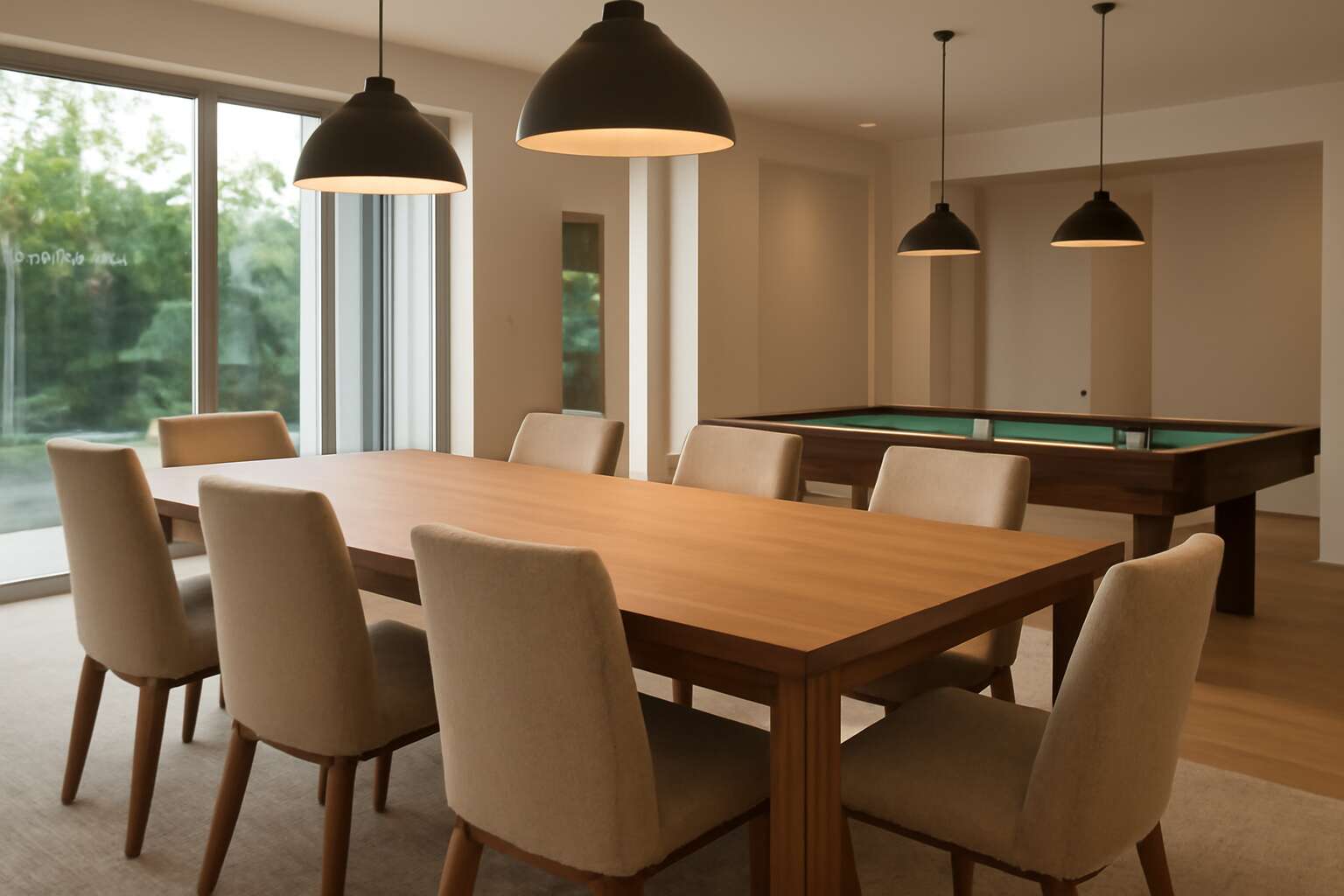
Spatial Planning: Connecting Dining and Pool Areas
Creating clear sight lines and traffic flow
In South Africa’s sunlit lounges, a striking stat surfaces in design polls: 68% of homeowners want living spaces where dining and recreation breathe in one rhythm. Achieving that energy comes down to spatial planning that makes the transition feel natural. When the dining to pool table alignment is right, conversations drift effortlessly between courses and cues, and the room becomes a theatre of shared moments.
Smart moves to connect zones:
- Align sight lines so the pool area remains visible from the dining table without glare
- Provide gentle traffic flow with a clear path of at least 1.2m
- Define zones with subtle materials like a rug or ceiling beam
When I plan with intention, the dining to pool table transition reads as a single story rather than two rooms split by furniture. It invites warmth, debate, and laughter—everything a social home should offer!
Zoning techniques to separate dining from gameplay
South African lounges are learning to tell a single story rather than two. A fresh design pulse shows up in homes where dining and recreation share air, not space. In this zone-forward mindset, the dining to pool table arrangement becomes a natural conversation bridge, guiding meals into moments of play and back again, without a stumble.
Zoning techniques that respect both dining and gameplay blend subtlety with strategy.
- Anchor dining with a rug that defines footprint and dampens movement without isolating people
- Layer lighting to cast warmer tones over meals and cooler tones near the table for cues without glare
- Color and material shifts create a soft boundary; choose upholstery and finishes that cue transition
Used with intention, the transition reads as a single living narrative, inviting warmth, debate, and laughter—as if the room itself leans in.
Accessibility and clearance around the pool table
Space that breathes turns a floor plan into a living story. In South African homes, dining to pool table spaces are not merely adjacent; they’re a shared stage where meals slip into play and back again. As one designer puts it, rooms with generous flow invite conversation at every turn.
Accessibility and clearance around the pool table shape that flow. There is a quiet poetry to open sightlines and well-placed pathways that invite kin to move from dining to the game, with furniture arranged to keep movement unimpeded. Designers weave soft boundaries—low shelving, floor rugs, and cushioned borders—that guide the energy without trapping it.
- Open sightlines between dining and pool areas
- Generous, unobstructed pathways around seating
- Soft lighting that transitions from meals to play
These choices create a cohesive living narrative—warmth, debate, laughter—without a stumble. When designed with intention, the dining to pool table arrangement reads as a single, warm conversation.
Acoustic considerations to minimize noise overlap
Across South African homes, spaces that connect dining to pool table aren’t mere adjacency; they’re a social continuum. The rhythm of open plans turns meals into conversation and play into after-dinner ritual—the floor plan breathes when the zones mingle.
Acoustic considerations begin where channels of sound meet. Minimise noise overlap with layered textures and soft boundaries.
- soft furnishings and textiles that soak up conversations and clatter
- curtains and padded seating to dampen echoes
- wall panels or timber slats that diffuse sound without shutting the room in
Plan spatially for calm, not crowding. Let seating and table heights create a rhythm that quiets the bounce of voices while maintaining visibility and flow.
Ultimately, this acoustic-aware spatial planning yields rooms that feel honest—open yet contained, where wit travels without being shouted, and South African hospitality persists in every gesture.
Furniture and Materials for a Cohesive Look
Choosing dining tables that suit proximity to cues
Rhythm lives where room and table are in dialogue. In South Africa, homes crave a luminous harmony where dining and games share a single horizon. “Balance isn’t a look—it is a habit,” a designer insists, and this belief guides every timber choice, color, and finish toward a cohesive mood that endures beyond dusk.
Furniture and Materials for a Cohesive Look: qualities that resist bustle and bloom with tact. Solid timber radiates warmth and can be tuned to mirror the pool table’s felt.
- Solid timber options such as oak, walnut, or jacaranda for warmth
- Finishes in matte polyurethane or Danish oil to resist marks and glare
- Leg designs that are slim yet sturdy to preserve legroom near the pool area
- Top materials that resist spills, like veneered plywood with a protective surface
The dining to pool table transition should feel seamless, a single breath of shared space!
Chair selection that balances comfort and practicality
In South Africa, 63% of homes report spaces where dining and games share one horizon. A designer murmurs, “Balance isn’t a look—it is a habit,” and this practice guides every timber choice, from chair to finish, forming a mood that endures beyond dusk. The dining to pool table setup becomes a whispered legend, not a corner.
Choose chair options that echo warmth and practicality. Solid timber frames—oak, walnut, or jacaranda—bring a soft, inviting glow. Matte polyurethane or Danish oil finishes resist marks and glare, while slim, sturdy legs preserve legroom near the pool area. Upholstery blends stain resistance with easy cleaning.
Key chair traits for a cohesive look:
- ergonomic back support
- cushioned seating that stays breathable
- wipe-clean upholstery and a durable frame
With this careful selection, the dining to pool table becomes a single breath of shared space, a myth made practical as timber, fabric, and light converse in harmony.
Surface materials that blend with the game area
Sixty-three percent of South African homes fuse dining and play on one horizon, and the secret is in furniture and materials that read as one story. When you design a dining to pool table zone, surface materials should blend warmth with practicality—timber tones, soft stone, and low-sheen finishes that invite lingering rather than glare-laden competition.
- Timber tabletops in oak, walnut, or jacaranda with a matte polyurethane or Danish oil finish
- Honed stone surfaces— limestone or slate—bring warmth and durability without shouting
- Low-sheen laminates and durable composites that resist marks and wipe clean easily
Finish the look with edges that soften the room—rounded rails, subdued leg profiles, and textiles that forgive spillages and invite lingering. The result is a cohesive zone that reads as designed, not forced.
Rug, flooring, and mat options for spill resistance
South African homes are rewriting the rule book, with 63% blending dining to pool table zones on one horizon. The trick is cohesion that breathes as one story—warm, inviting, and ready for the occasional volley.
Rugs and flooring set the tone. Opt for wool blends or durable synthetics in timber-inspired hues—low-pile, stain-resistant options that glide under chairs and hide the occasional spill. A cohesive palette keeps the cue area feeling like part of the room, not an afterthought.
Flooring transitions should be graceful, with practical mats that handle mishaps without drama. Consider these picks:
- Vinyl-backed mats near dining chairs to catch spill drips and wipe clean
- Low-pile, stain-resistant rugs that extend under the table for cohesive grip
- Durable, indoor-outdoor runners that tolerate heavy traffic and beer splashes
Lighting and Ambience for Dual-Function Spaces
Layered lighting to highlight dining and playing zones
“Lighting is the quiet conductor of a room,” a phrase that lands in South African homes where spaces double as dining to pool table hubs after sunset. Layered lighting shapes mood and flow, guiding conversations from meals to the crack of a cue.
To weave depth into dual use, three lighting layers work in harmony:
- Warm, dimmable ambient lighting that fills the room without glare
- Focused task lighting above the dining area to illuminate meals and tablesettings
- Soft accent lighting near the pool table to frame the cues and woodwork
Together they create a gentle rhythm that keeps voices easy and eyes comfortable.
In our spaces, the glow of careful lighting makes ordinary evenings feel expansive and warm.
Task lighting for dining areas near the table
South African evenings crave warmth and clarity; a quick stat says 63% of hosts say a warm, layered glow makes conversations linger longer and meals feel more intimate.
In dual-function rooms, lighting is the maestro, balancing warmth and focus so voices drift from the dining table to the chalk-scarred slate without a hitch. The right glow guides eyes, softens shadows, and prevents glare on glossy dishes and polished cues.
That seamless flow from dining to pool table relies on lighting that guides the eye and warms the mood.
Ambient lighting to reduce glare and reflections
Across South Africa, 63% of hosts say a warm, diffuse glow makes conversations linger and meals feel intimate, turning a room into a small sanctuary after sunset.
Ambient lighting to reduce glare and reflections flows like a soft tide from the dining area toward the pool table, letting voices drift without competing with glossy plates or chalk-dusted slate. The trick is to blend luminance with texture—matte woods, warm-bronze fixtures, and wall washes that sculpt shadows rather than shatter them.
Consider these ambient cues to sustain the quiet magic between zones:
- Warm, low-contrast tones that travel along walls and surfaces
- Non-glare finishes on glass and polished stone
- Indirect lighting that avoids direct reflections on the cue ball and table felt
From dining to pool table, the room should breathe as one—an intimate theatre where conversation, card games, and quiet applause share the same soft halo.
Color temperature and dimming strategies
In SA homes, 63% report that a dining to pool table setup feels like a living sunrise—bright enough for conversation, soft enough for quiet focus. Color temperature and dimming strategies shape the mood, turning a shared meal into a late-night retreat.
Keep dining areas warm at 2700–3000K to invite lingering chatter; let the pool table glow drift a touch cooler, around 3500K, so reflections don’t steal the moment. Dimming becomes the bridge between daylight energy and evening hush.
- Zones with warm, diffuse tone guiding movement between spaces
- Indirect, non-glare accent lighting around the cues and felt
- Adaptive presets that soften contrasts as night deepens
Let the room breathe as one—a theatre where conversation and quiet applause share the same soft halo.
Accent lighting and artwork to unify spaces
In South Africa, 63% report that a dining to pool table setup feels like a living sunrise—bright enough for conversation, soft enough for focus. Accent lighting and artwork unify the spaces, turning the shared moment into a refined theatre—rather than a clash of functions!
Let the room breathe as a single narrative, with pieces of art and lighting cues that travel from the dining zone to the pool area. To weave harmony, consider these accents:
- Art selections that echo the table felt and warm timber, drawing the eye across both zones
- Soft spotlights that caress artwork without glare on the felt
- Austere silhouettes in fixtures that glide along walls, guiding movement
The two zones merge into an occasion—a continuum of social dining and relaxed play.
Accessories, Decor, and Storage Solutions
Cushions, textiles, and color accents that tie the room together
A recent design survey found that spaces blending dining to pool table extend evenings by about 25%, a reminder that meals and matches share a common heartbeat. When cushions, textiles, and color accents are chosen with care, the room becomes a warm archive of daily life—quiet conversations, easy laughter, and a soft, shared glow.
- handwoven cushions in earthy tones
- durable linen throws for chilly SA evenings
- color accents drawn from local landscapes (ocher, sage, deep blue)
Accessories and storage speak softly: cushions in earthy textures, textiles that echo the South African veld, and color accents that bind the spaces without shouting. Woven baskets, timber chests, and quiet display boxes hold cushions, remotes, and small keepsakes—so the living area breathes with calm between meals and matches.
Storage options for cues, chalk, and dining essentials
Evenings stretch when a room earns two rituals—the clink of glasses and the soft whisper of a cue ball finding its mark. A design survey notes spaces blending dining to pool table extend evenings by about 25%, proof that meals and matches share a common heartbeat.
Accessories and decor should whisper, not shout. In a space crafted for dining to pool table, storage for cues, chalk, and dining essentials anchors the flow:
- Woven baskets for cues and chalk
- Timber chests for remotes and placemats
- Quiet display boxes for keepsakes and menus
Finish with quiet drama: brass trays catching light, ceramic vases holding a sprig, and timber accents that bind spaces without shouting. In a South African setting, these subtle details invite a lingering gaze—between meals and matches, the room breathes as one.
Protective measures for table and flooring
Evenings stretch when the clink of glasses and the soft whisper of a cue ball find their rhythm. In South Africa, a room that moves gracefully from dining to pool table feels almost magical, where accessories and decor whisper rather than shout. A few woven baskets, timber remote chests, and quiet display boxes anchor the flow, letting meals and matches share a common heartbeat—a dining to pool table rhythm.
Protective measures for table and flooring are part of the design, not afterthoughts. For a gentle, lasting game and dinner, consider the following touches:
- Non-slip felt underlays beneath the dining surface to protect floors
- Table edge guards and fitted covers to fend off spills
- Soft, washable placemats and coasters that trap moisture
- Leg caps and glides to reduce scuffing on timber feet
Storage and decor breathe as one scene: hidden compartments for remotes and menus, brass trays catching late light, ceramic vases with a single sprig, timber accents that subtly bind the zone. The room becomes a gentle theatre where dinner and game live in harmony without shouting.
Personalization ideas that reflect style without clutter
Accessories anchor the transition between dining and play. Choose pieces that whisper rather than shout: hand-thrown ceramic vases, linen-wrapped decanters, and ebony wood frames. A few tactile items—leather coasters, a sculptural centerpiece, soft lighting glow—keep focus on conversation while the room breathes with proportion.
Decor that travels with the space is about restraint and texture. A simple color story, natural materials, and locally crafted accents tie zones together. Consider the following personal touches:
- Low-profile art that echoes the room’s palette
- Timber accents and woven textures to unify zones
- Strategic plant placements for life and height without clutter
Storage should be subtle and flexible. Slim, push-pull cabinets hide remotes, menus, and game-day chalk tins. Floating shelves keep display items tidy; a single brass tray catches late light. This approach supports the dining to pool table rhythm and keeps everyday life seamlessly elegant.

0 Comments