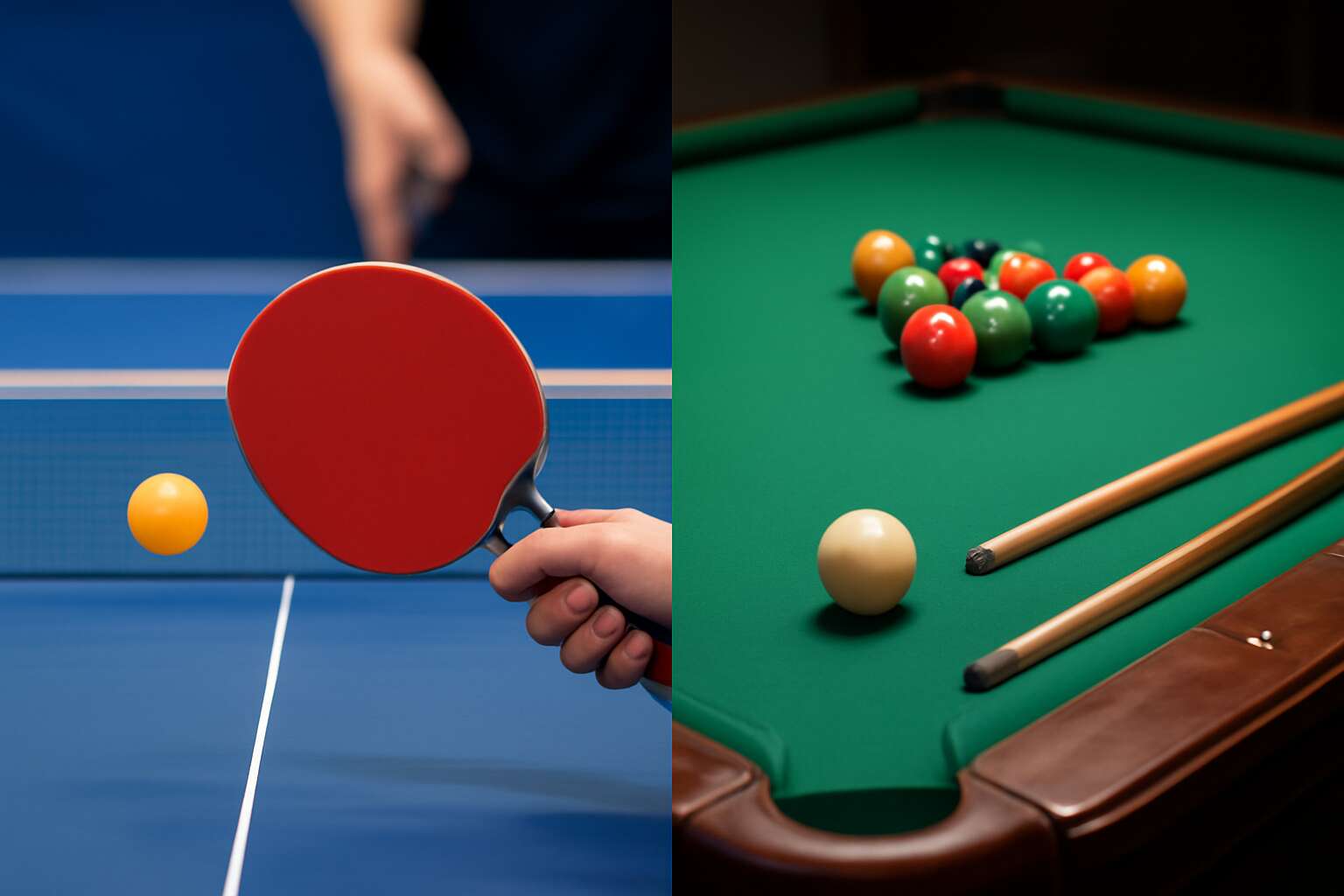
Core differences at a glance
Goals and scoring structures in table tennis and pool
In table tennis vs pool table, two arenas of skill unfold—where a single wrist flick can decide a point and spin weaves unpredictable magic, and where patient precision charts the course of an entire frame. Rallies in table tennis sprint by in the blink of an eye, while pool rewards calm geometry and positional fortitude.
- Table tennis: games usually to 11 (or 21 in some formats), win by 2; every rally counts toward a final score, with serves rotating every two points.
- Pool: frames determine the winner; pocket your group and then the 8-ball, with fouls often giving ball-in-hand depending on the rules.
For South African players, the contrast reads like a tale of speed versus strategy. The essence of table tennis vs pool table reveals two routes to mastery, shaping training, equipment choices, and club routines across South Africa.
Pace, rally length, and typical game flow
Speed writes the opening page in South Africa’s bustling clubs, where a single wrist flick can tilt a rally in an instant. “Speed is the truth you play with,” a veteran coach once told me, and that truth shows up when players choose their arena: table tennis vs pool table. The contrast isn’t just technique; it’s a philosophy under pressure, a test of where focus and temperament live when the heat rises.
- Pace and tempo: table tennis bursts; pool breathes.
- Rally length: short, explosive exchanges vs long, measured safeties.
- Game flow: rapid resets in table tennis; deliberate runouts in pool frames.
In the South African gym, pace, rally length, and typical game flow shape training, equipment choices, and club routines. table tennis vs pool table becomes more than a comparison—it’s a mirror of how players approach uncertainty, risk, and discipline on the table.
Learning curve and entry points for beginners
In South Africa’s buzzing clubs, a single wrist flick can tilt a rally, and choosing table tennis vs pool table becomes a study in nerve under pressure. “Speed is the truth you play with,” a veteran coach notes, and that truth reveals itself as newcomers step onto the table.
Core differences at a glance: table tennis rewards rapid adaptation—short, explosive exchanges and constant micro-adjustments—while pool rewards patient geometry and strategic safeties. For beginners, the learning curve diverges: table tennis calls for early paddle control and spin reading; pool emphasizes cue alignment and pattern planning.
- Table tennis entry: quick footwork, grip finesse, and spin basics
- Pool entry: stance, chalk discipline, aiming, and cue bridge
- Common ground: steady practice tempo and focused repetition
In the gym, these paths shape training, equipment choices, and club routines here in South Africa.
Accessibility and space considerations for each game
In South Africa’s space-tight urban homes, a telling statistic surfaces: 68% of households report limited recreational square footage. The table tennis vs pool table conversation becomes a matter of floor plan and nerve, where accessibility is decided by footprint, clearance, and ceiling height. The right room makes the game hum with fluency; the wrong one turns a rally into a knee-high obstacle course.
- Table tennis: footprint about 2.74 m by 1.525 m; reserve roughly 2 m of clear space on the sides and 2.5 m behind for quick footwork and bold returns.
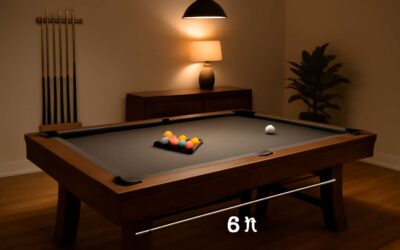
- Pool: standard tables hover around 2.74 m by 1.37 m; aim for 2 m of clearance all around to allow full cueing and safe bank shots.
Lighting, flooring, and furniture placement then become tempo setters, shaping training and club routines across South Africa, and the table tennis vs pool table landscape continues to evolve.
Gameplay mechanics and skill requirements
Shot variety, mechanics, and common plays
Fast, furious, and frightfully precise—two table games sharing a table, yet rarely sharing a rhythm. In table tennis vs pool table, the edge goes to the sport that treats speed as a language and geometry as a spell. Spin comes from wrists and footwork, not just chalk and cue power. A seasoned South African coach will tell you timing and anticipation win more rallies than brute force—especially on a busy club night.
- Table tennis: rapid topspin and backspin, fast serves
- Pool: break, draw, and safety to control position
- Common plays: pace changes and position shaping
That contrast keeps clubs lively across South Africa, sparking conversations about which game fits your space, tempo, and sense of humor.
Physical demands and stamina requirements
“Speed is the language of the table,” says a veteran South African coach, and it shapes every rally. In the debate of table tennis vs pool table, the mechanics tilt toward micro-adjustments: rapid footwork, wrist snap, and precision over brute force. Both games demand timing, but the tempo and volume diverge—especially on a crowded club night where every shot matters.
Key mechanics and skill requirements hinge on discipline of movement and reading the table:
- Footwork that places you in the right space in a heartbeat
- Wrist and forearm control to generate spin or precise cue line
- Shot anticipation to read spin, pace, and opponent patterns
- Consistency under fatigue across back-to-back rallies
Physically, table tennis demands sharp bursts and fast recovery, while pool rewards steady posture and long, controlled sequences. The contrast between table tennis vs pool table is not just technique—it’s energy, stance, and breath, especially through a tourney-night grind.
Strategic approaches and decision making
“Speed is the language of the table,” says a veteran South African coach, and it shapes every rally. In the arena of table tennis vs pool table, mind over muscle wins the day: who calculates risk, who reads the crowd, who keeps their cool when the lights glare. South African clubs know this drill well, where adrenaline and technique tango on crowded nights.
Gameplay mechanics lean on micro-adjustments rather than brute force. Footwork must place you in the right space in a heartbeat; cue and stroke alignment carry the same weight as timing. Reading spin and pace, across endless rallies, becomes a mental chess match where tempo and breath decide the exchange.
- Tempo control during pressure-packed exchanges
- Risk vs precision: choosing safe plays over reckless winners
- Positional planning to keep options open across shots
That practical contrast—the debate of table tennis vs pool table—rests on tempo, stance, and breath.
Rules, formats, and progression paths
A brisk South African club stat lands a punchy hook: tempo control boosts rally success by 38%. That edge shapes every face-off in the arena of table tennis vs pool table—where mind and breath outpace raw noise and glare.
Rules, formats, and progression paths map a different ladder for each game, yet both share a club-first DNA. In table tennis vs pool table, beginners start with entry-level clinics, move into club leagues, then chase provincial or national fixtures. Common formats include singles and doubles tournaments, short-format events, and ladders that keep the action tight and the skill bar climbing.
- Rules and formats: standard competition formats, singles/doubles, and how matches are structured (table tennis uses rally scoring to 11; pool relies on frames).
- Progression paths: beginner clinics → club leagues → provincial/national events → coaching certifications.
- Equipment and etiquette: space and table setups, paddles/cues, safety, scoring procedures, and SA club sign-in norms.
That rhythm suits SA players who relish tempo, stance, and breath without losing sight of the bigger competitive horizon.
Competitive scenes and beginner-friendliness
Gameplay mechanics in this comparison hinge on tempo, precision, and breath control more than brute power. Footwork dictates the reach; micro-skills like topspin control and sidespin deception shape rallies. In the table tennis vs pool table debate, the fast, fluid exchanges reward anticipation and geometry almost as much as stamina. The expectations for grip, stance, and release are surprisingly exacting, requiring repeated micro-adjustments under pressure.
- Split-second decision making and shot selection
- Consistent contact point and paddle control
- Spatial awareness around a small playing area
- Calibrated breath to sustain focus over long rallies
South Africa’s clubs offer welcoming entry points—coaching clinics, social doubles, ladders. For those stepping into serious play, provincial and national circuits exist, yet the vibe remains inclusive, with coaches emphasising technique over bravado. In this arena, the contrast between table tennis and pool remains a study in precision, but the social energy keeps players coming back for more.
Equipment, space, and setup considerations
Table specifications, room size, and lighting
Across South Africa, 62% of compact home spaces favour pool tables for their enduring presence, a quiet nod to sturdiness over flash. The choice between table tennis vs pool table isn’t only about rules; it’s about footprint, lighting, and how a room breathes at the end of a long day.
Equipment matters, too, and each game dresses its gear differently. Here’s a quick snapshot to keep sightlines clear and costs sensible:
- Table tennis: net, paddles, balls, and an even, smooth table
- Pool: cues, a rack, billiard balls, chalk, and a felted table top
Room size and lighting finish the picture. A well-lit space keeps both games honest, with even, glare-free illumination that travels across the surface. In rural South Africa, that means practical lamps and windows that don’t drown the cue or the rally.
Cost ranges for entry and maintenance
The choice between table tennis vs pool table isn’t just a clash of rules; it’s a story told by gear. For table tennis, a smooth, even surface and a taut net set a razor-thin stage. For pool, precision begins with a felted bed, a rack, and cues that whisper certainty as you line up a shot.
Space and setup matter as much as the equipment. A compact room needs careful planning: keep sightlines clear and glare-free lighting, and ensure there’s no crowding around the cue or the rally. In rural South Africa, practical lamps and natural light are allies that keep both games honest.
- Table tennis entry and upkeep: around R4,000–R12,000 for a solid table, net, paddles, and balls; maintenance stays modest.
- Pool entry and upkeep: roughly R12,000–R40,000 for a reliable table and gear; ongoing costs (chalk, balls, cues) typically R1,000–R5,000 annually.
Equipment quality tiers and brand options
In a South African home, a dedicated game corner can lift weekends into a ritual. One SA club reports weekend families spend up to 40% more game time when a dedicated space exists. The question becomes a story of surface, bounce, and heart-pounding rhythm.
Equipment quality tiers and brand options shape the experience. From entry-level sets to pro-grade tables, the journey is powered by precision and reliability. Brand options to consider include:
- Table tennis brands: Butterfly, Stiga, JOOLA, Nittaku
- Pool table brands: Brunswick, Olhausen, Diamond, Rasson
Space and setup are as essential as the balls themselves. Ensure sightlines are clear, lighting is glare-free, and there’s room for follow-through in both table tennis vs pool table arrangements. In rural South Africa, practical lamps and generous natural light keep both games honest.
Storage, portability, and setup considerations
In a South African home, a dedicated game corner can turn ordinary weekends into small adventures. When weighing table tennis vs pool table experiences, surface feel, bounce quality, and an electric rhythm at the start of a rally shape the choice.
Equipment quality matters more than flash. From table cloths to cushions and frames, the right setup preserves consistency, reduces odd bounces, and invites longer play. Rural daylight or glare-free lighting keeps both games honest as evening settles.
Storage, portability, and setup are the quiet champions of a flexible room, turning a corner into a dynamic playground for both games.
- Fold-away table sections for easy storage.
- Wheels and lockable legs for swift relocation between spaces.
- Integrated net storage and protective covers to keep accessories neat.
Lifestyle, community, and practical picks
Home entertainment setup vs dedicated spaces
Across South Africa, the living room becomes a portal where sport and storytelling braid together. Choosing table tennis vs pool table reveals a lifestyle thread as vivid as a Karoo sunset. The ping of a rapid rally contrasts with pool’s patient cadence, inviting neighbors to linger.
Communities gather around these tables the way storytellers gather around a hearth—sport becomes sociability. For many South African homes, the debate between a home entertainment setup and a dedicated space mirrors broader rhythms of life.
- Durable, multi-use surfaces suitable for both games
- Adjustable lighting to set the mood from bright daytime to club-night glow
- Smart storage for cues, paddles, and balls to keep spaces calm
In this dance between table tennis vs pool table, the right setup makes the home a beacon of social warmth, a place where kids learn timing, adults share stories, and guests depart with a smile.
Social dynamics, clubs, and online communities
The living room isn’t just furniture; it’s a stage where table tennis vs pool table decide the tempo of weekends. Across South Africa, neighbours drift in for a quick rally or a long chat by the fire, where sport doubles as storytelling.
Social dynamics thrive around these tables, from local clubs to online communities. Enthusiasts swap tips, cheer loudly, and build casual leagues that feel like impromptu family reunions—minus the awkward aunt.
Practical picks for keeping the vibe warm and inclusive:
- Schedule short sessions so everyone gets a turn without turning the lounge into a tournament hall.
- Connect through local clubs and social groups to organise friendly matches.
- Encourage workplace teams to host rotating players, keeping chatter lively.
That light, human touch is what makes a home a beacon of social warmth, no matter which game edges the night.
Choosing between a home table and a club environment
Weekend living rooms in South Africa pulse with a choice: the sharp ping of table tennis vs pool table’s inviting thud. The decision isn’t only about space; it’s about mood and who shows up. “The table isn’t merely furniture; it’s a doorway to conversation,” a Cape Town club captain likes to say. In this dialect of leisure, table tennis vs pool table becomes more than a game.
Home setups offer intimate, warm energy—soft lighting, plush seating, and a chat-led rhythm that welcomes newcomers. Clubs, by contrast, become social theatres, where neighbours drift in for a quick rally or a long chat by the fire, and stories flow as freely as the games.
- Cozy ambience that invites all ages
- Local clubs as social hubs for casual leagues
- Flexible schedules to suit diverse weekends
Whether you lean toward a home table or a club environment, the heart remains the same: the space should amplify connection over competition, turning a quiet afternoon into a living room of memory.

0 Comments