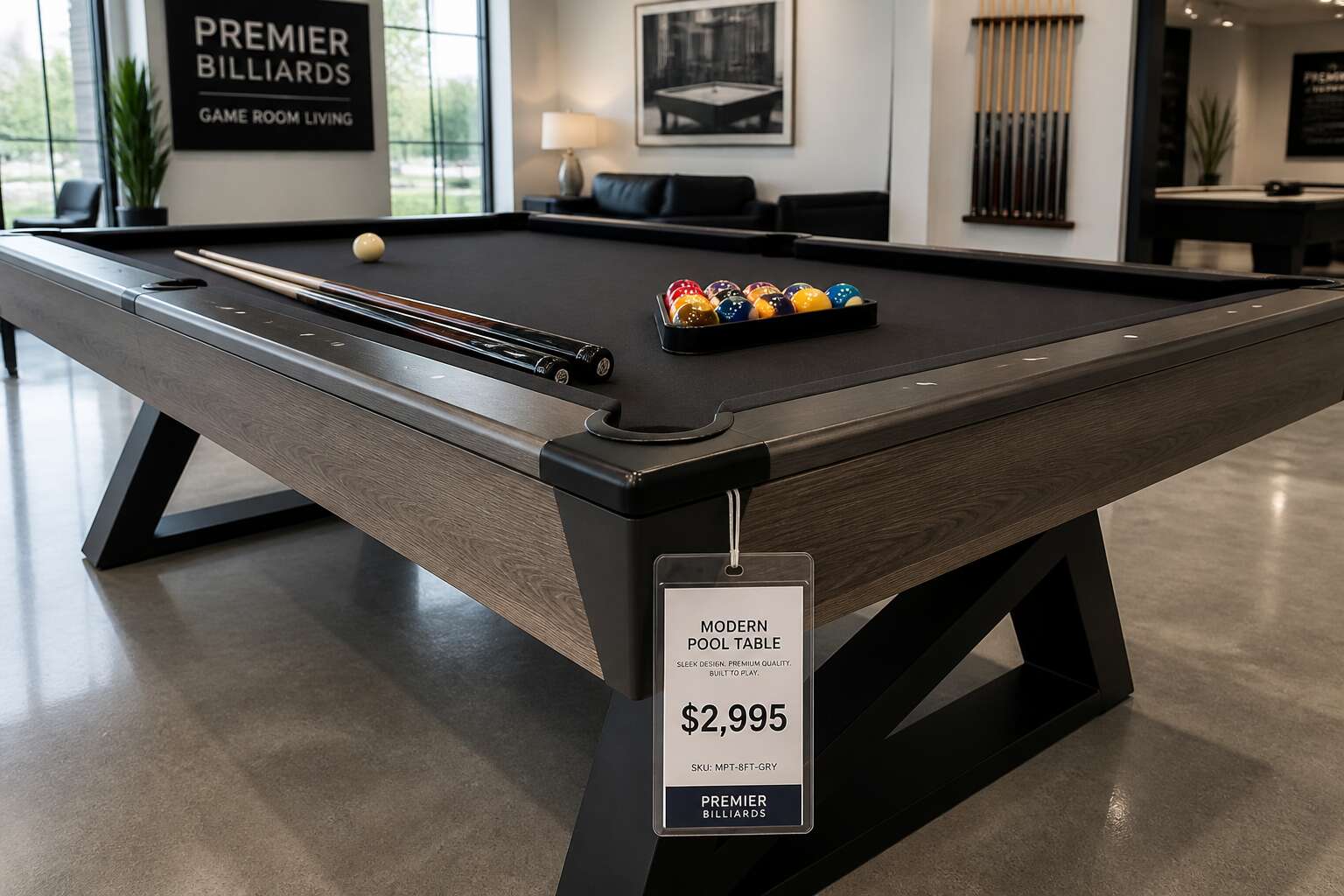
Price Ranges by Table Type
Budget Pool Tables
For many South African households, the first figure that comes to mind when asking pool table is how much often leads to a search for entry level options. You can frequently secure a brand new, budget friendly table for between R4,500 and R9,000. This price point usually covers a basic 6 or 7 foot model with a thin MDF playing surface and a standard cotton cloth. It is an accessible entry point for families wanting a casual game room addition without a significant financial commitment.
However, the lower price tag comes with tangible compromises. The slate bed on these tables is often thinner, or sometimes replaced entirely with particle board, which can warp under the humidity common in coastal regions like Durban. The cushion rubbers lose their rebound after a year or two of regular use, which makes competitive play frustrating. For a serious player, this type of table is a temporary solution, not a lifelong investment.
When evaluating these affordable options, consider the specific construction details:
– The playing surface is frequently a single piece of high density fibreboard (HDF) rather than genuine slate, which affects ball roll accuracy.
– Cushion response is slower, and the angle of the pockets is often more generous, making shots easier but less challenging for skill development.
– The included accessories, like cues and balls, are typically lightweight and prone to warping quickly.
While this range makes the game accessible, remember that assembly and levelling are critical. A poorly set up budget table will play worse than a well maintained second hand slate model. So, when you ask pool table is how much, factor in the cost of professional installation, which is rarely included at this price level, to ensure the frame remains square and the surface stays perfectly horizontal.
Mid-Range Pool Tables
Mid-range tables shift the conversation around pool table is how much in a meaningful direction. Spending between R10,000 and R25,000 typically secures a 7 or 8 foot table with a genuine slate playing surface. That slate arrives in three pieces, which allows for proper levelling and a true roll across the entire bed. The frame gains real weight, reducing vibration during shots.
The cushions use higher grade rubber that maintains its rebound for years. Pocket angles tighten slightly, demanding more precision from your cue action. This is the tier where the game starts to feel serious.
Key features found at this price level:
- Solid hardwood or MDF frame construction
- Genuine slate bed, usually 25mm or thicker
- Professional grade cloth, often worsted wool
When you ask pool table is how much, this tier answers with durability. From my own installation, I can tell you the difference is substantial. The range suits the player who has outgrown casual weekend games and wants a consistent playing experience at home.
High-End and Luxury Pool Tables
When you start asking pool table is how much at the absolute peak of the market, the numbers can feel like they belong to a different world. Premium tables, those that serve as centrepieces in private clubs and serious player homes, start around R45,000 and climb with alarming speed. The top tier often exceeds R150,000. This is where the table becomes an heirloom piece, built without compromise for the purist.
These tables are no longer furniture. They are precision instruments. The slate, imported from Italian quarries, is machined to tolerances measured in thousandths of a millimetre. The frame is solid kiln dried hardwood, and the pockets are cut by hand. The cloth is a tournament speed worsted wool that requires a dedicated climate controlled room to perform correctly. You are paying for obsessive accuracy.
The true mark of this tier shows in the details. The cushions are specially formulated to replicate the exact rebound characteristics of tournament equipment used on the professional circuit. The playing surface is perfectly flat, allowing for bank shots to behave with mathematical certainty. The level of craftsmanship here means the table will outlast you, your children, and potentially your grandchildren.
If you are comparing these options while wondering about pool table is how much, expect the following specifics:
- Full hand finished timber with veneer inlays
- Slate thickness of 32mm or greater, often in a single piece
- Custom leather pocket liners and metal nameplates
- Access to skilled installers for precise leveling and cloth fitting
From a personal perspective, I have seen players walk into a showroom with a budget of R80,000 and walk out with a table that cost double that amount. The appeal is understandable. When the question of pool table is how much is answered by a price tag this large, you are not just buying a game. You are purchasing a legacy piece. The investment holds value, often appreciating if the brand maintains a strong reputation. For the serious collector or the dedicated competitor, the cost becomes secondary to the pure, unrivalled playing experience.
Commercial-Grade Tables
There is a point in the market where the question of pool table is how much takes on a very different meaning. We move away from home entertainment and into the realm of public performance. These are the workhorses, the tables that stand in bars, clubs, and community halls across South Africa. They need to survive spilled drinks, aggressive play, and constant use. The price reflects this brutal reality. A decent commercial grade table starts around R25,000 and can scale up to R60,000 depending on the build specifications.
You will find that the construction prioritises rigidity over ornate detail. The slate is still thick, often a 25mm or 32mm single piece, but the frame is built heavier to prevent any flex during play. The cloth is typically a slower, more durable weave that resists tears and staining. These tables use a lockdown mechanism for the balls and a sturdy coin operation system to deter theft. The pockets are designed with wider, deeper throats to handle the fast pace of bar play without jams.
– Armoured body construction with steel corner brackets
– Tamper resistant coin or bill acceptor mechanisms
– Heavy duty vulcanised rubber cushions for consistent rebound
– Industrial grade finish that resists scratching and cigarette burns
The real cost appears in the maintenance. A commercial table gets played on for hours every day. The cloth will need replacing after a year of heavy traffic, and the cushion rubbers will eventually lose their bounce. When you factor in the purchase price and the ongoing upkeep, the long term cost of pool table is how much in this category becomes a recurring line item for a business owner. It is a capital investment in revenue generation, not a nod to aesthetics.
Antique and Vintage Tables
Antique and vintage tables change the question of pool table is how much entirely. These are not mass produced. They carry history, and often a hefty price tag. A genuine 19th century English table can fetch R80,000 or more. But condition matters immensely.
Restored tables with original slate and mahogany frames retain value. Others require extensive work. You might find a neglected gem for R15,000, then spend double on that restoration.
Consider these factors when pricing:
- Provenance and maker’s mark
- Originality of components
- Wood type and carving detail
The rarest pieces are investment assets. For a collector, the answer to pool table is how much depends on provenance, not production cost. Antique tables demand patience. They are not for casual players.
Factors That Determine the Price of a Pool Table
Construction Materials: Slate vs. MDF
The first question every buyer asks is, pool table is how much. Yet the real price emerges from what lies beneath the cloth. Slate versus MDF is a battle of weight and truth. A three piece slate surface, cut from natural rock, costs more because it resists warping for decades. MDF, a compressed wood fiberboard, offers a lighter frame and a gentler entry price, but it bows under humidity. I once felt a table flex like a living thing, and that movement never leaves you.
Here is what separates them:
– Slate creates a dead, consistent rebound.
– MDF absorbs moisture and changes with the seasons.
– Slate requires professional installation and a sturdy floor.
– MDF suits temporary rooms or rental spaces.
Each choice alters the final number you pay. So when someone asks pool table is how much, they are really asking about stone versus board.
Frame and Cabinet Quality
A table’s frame is its skeleton. I once lifted the corner of a cabinet labeled as hardwood and found particle board hiding under a painted finish. The genuine price lives in the joinery and the density of the timber. A cabinet built from solid oak or South African hardwood supports the slate without twisting for decades.
Veneers complicate the cost. A table wrapped in real walnut veneer with a hand rubbed lacquer costs more than a printed grain vinyl, though both look similar in a showroom. Inspect the skirt, the legs, and internal bracing.
- Dovetail joints resist racking over time.
- Glued and screwed corner blocks add structural strength.
- Adjustable levellers protect the frame on uneven floors.
Each element moves that final figure. When a player asks pool table is how much, the answer reflects the frame’s honesty as much as the playing surface.
Felt and Cushion Standards
Felt reveals a table’s character. A worsted wool blend plays faster and resists pilling, while polyester cloth slows the ball and wears unevenly. South African humidity affects both, so the backing material matters. When a player asks pool table is how much, the cloth weight and nap form part of that answer.
Cushions deserve equal scrutiny! The rubber compound determines rebound consistency. A 35mm profile with a tuned K55 or K66 profile returns the ball predictably. Cheaper tables use recycled rubber that hardens within years. I have handled a table where the cushion rubber cracked after three seasons of coastal air.
- Worsted wool versus woven polyester
- Cloth weight, typically 21 to 24 ounces
- Rubber durometer, or hardness rating
These factors shift the final figure. A table that plays true needs both working together, and that is why pool table is how much depends on standards you cannot see from across the room.
Brand Reputation and Craftsmanship
A brand’s name is a ledger of decisions made over decades. When a player asks pool table is how much, they are actually asking what the maker promises after years of play. Reputable manufacturers season timber, kiln dry the frame, and align every joint before finishing.
Craftsmanship appears in the details. Dovetailed corners stay square longer than butt joints. Hand-rubbed lacquer protects against coastal humidity. Skilled workers sand the rails twice, then seal the edges. These steps cost money and time, and they explain the price gap between brands.
Consider what each brand offers:
- Dovetailed joints versus glued and stapled frames
- Seasoned hardwoods instead of green timber
- Multi-stage finishing that resists moisture
The name behind the table carries that burden. In South Africa, a recognised brand also means a local agent who can service the table. That assurance is folded into pool table is how much.
Size and Playing Surface Dimensions
Size is the first thing that moves the needle on pool table is how much. A 7 foot table fits most South African lounges, but an 8 foot or 9 foot table demands more slate, more timber, and more floor space. The playing surface dimensions directly dictate the price. A 9 foot tournament table uses a single piece of 45mm slate, while a 7 foot often uses three pieces. That difference alone shifts the cost by thousands of Rand.
Standard sizes to consider:
– 7 foot (bar size): 2.1m long
– 8 foot (home size): 2.54m long
– 9 foot (tournament): 2.9m long
Larger playing surfaces also require longer cushions and more felt, which boosts maintenance costs. When you ask pool table is how much, your room size often answers for you. A home 8 footer with a proper playing field will cost more than a compact 7 footer, but both need a level base. The surface dimensions remain the true test of value.
Customization and Included Accessories
Customization is where the price deviates from the catalogue. Want a club logo embroidered on the cloth? That carries a surcharge. Prefer walnut over standard oak? The timber upgrade alone can add thousands of Rand. Accessories complicate the calculation. A basic package includes two cues, a set of balls, and a triangle rack, but these are entry level items.
I have watched buyers overlook the extras until after the table arrives. Then they discover that a single quality cue costs more than the entire felt replacement. When you ask pool table is how much, the smart response is to ask what is in the crate. The bundled accessories can shift the total cost by a meaningful margin.
Typical accessories that affect the budget:
– Custom embroidered cloth
– Match grade cue sets
– Tournament ball sets
– Leather pocket liners
Hidden Costs Beyond the Purchase Price
Delivery and Installation Fees
You found the table, and the sticker price made you nod. Then the delivery quote arrives, and that nod becomes a slow head shake. The question “pool table is how much” rarely covers what happens after you swipe your card. In South Africa, moving a slate behemoth from warehouse to living room is a custom operation.
Delivery fees depend on distance, access stairs, and whether the driver brings helpers. Installation adds another layer. A qualified team levels the slate, assembles the frame, and stretches the cloth without a single crease. That expertise commands a fee!
- Fuel surcharges for long hauls
- Stair or elevator charges
- Felt stretching and leveling service
- Disposal of packaging materials
Your actual spend now dwarfs the original quote. So when someone asks “pool table is how much,” remember the hidden arithmetic.
Essential Accessories: Balls, Cues, and Racks
So you’ve paid for the table, the delivery, and the installation. The room stands ready. Then you walk to the table with bare hands and realize the true meaning of the question “pool table is how much.” The table itself is only the beginning. A slate slab without a cue is a very expensive dining surface.
The essential accessories arrive as their own line items. Quality cues, a full set of balls, and a rack are not included in that base price. These items often cost as much as a decent mid-range table.
– Two-piece professional cues cost more than basic house sticks.
– A set of phenolic resin balls sits at a premium price.
– Wall-mounted cue racks protect your investment and your walls.
– Chalk, brushes, and a cover add to the tally.
Each piece matters for play quality. Buyers who ask “pool table is how much” and stop there often face sticker shock again at the accessory counter. Budget for these items before you buy the table, not after.
Proper Lighting for the Table
Most players underestimate the importance of overhead lighting. A single pendant lamp casts harsh shadows across the cloth, distorting every shot. The real answer to pool table is how much only emerges once you price a proper lighting system.
I have watched buyers spend R30,000 on a table, then hesitate at a R3,000 lighting fixture. The light determines how well you actually play.
Consider the common options:
- Ceiling-mounted fixtures that span the full playing surface
- Adjustable hanging lights with diffusers
- LED bars that reduce heat and glare
Each option requires its own electrical work. Wiring, dimmer switches, and positioning all add to the final bill. Most owners budget about ten percent of the table price for lighting. That cost belongs in the initial figure, not the discovery phase.
Room Preparation and Floor Protection
So you have priced the table, the cues, the balls, and that fancy light fixture. Now consider the room itself. The question “pool table is how much” extends to the floor beneath it. Many South African homes have carpets that crush under 300 kilograms of slate, or tiles that crack when the table legs settle unevenly.
You may need to level the floor, reinforce the joists, or install a dedicated mat. That mat prevents dents and keeps chalk dust from grinding into your flooring.
- Heavy-duty rubber mats for slate tables
- Vinyl floor protectors for hardwood
- Carpet shields that absorb impact
Each option adds a few hundred to a few thousand rand. The honest answer to the original question includes room preparation. Budget for it before the delivery truck arrives.
Ongoing Maintenance and Repair Expenses
The real price of a pool table reveals itself in its quiet demands. A table played weekly needs new cloth every few years, and South African humidity can warp even the finest timber.
Reclothing a standard slate table runs from R1,500 to R4,000 depending on the cloth you choose. Cushion rubber degrades after a decade of heavy use, and replacement costs R2,000 to R5,000. A professional leveling service adds another R800 to R1,500, especially after moving house.
- Chalk and brush replacements, R50 to R300 monthly
- Felt repair for burns or tears, R500 to R2,000
- Corner plate and pocket renewal, R400 to R1,200
So when someone asks pool table is how much, the answer must include these recurring expenses. Ignore them and your investment loses playability, then charm.
New vs. Used Pool Tables: Price Comparisons
Advantages and Trade-Offs of Buying New
When shoppers first ask what a pool table is how much, they typically compare sticker prices between new and used models. That comparison reveals more than surface savings, since a used table carries hidden risks in slate condition, cushion rubber, and cloth wear.
Buying new offers a defined warranty, precise installation, and the certainty that no previous owner compromised the frame. The trade-off is cost, often 20 to 40 percent higher than a comparable used table, before you factor delivery and setup fees. Used tables demand hands-on inspection for warped rails, damaged pockets, and uneven slate seams.
- New tables arrive with factory levelling and untouched cushion performance.
- Used tables may need new felt, new cushions, or re-leveling shortly after purchase.
The real answer to pool table is how much only emerges when these trade-offs are priced in, since the cheaper used unit can quickly lose its appeal through repair expenses.
Where to Find Reliable Used Tables
Shoppers in Johannesburg and Cape Town often discover that a used table costs half as much as a new one. That difference forces a hard look at what you actually gain from the higher sticker price. A well cared for used model can deliver solid play for years, so the true answer to pool table is how much depends on condition, not just the price tag.
Reliable used tables appear through billiard supply shops that offer trade ins, as well as private classifieds. Dealers usually inspect their stock, while private sellers may leave you to judge the frame, cloth, and slate yourself.
- Ask for the brand and model, then compare it to the original retail price.
- Check that slate seams sit flush and level across the playing surface.
- Roll a ball along the cushions to test rebound consistency.
A low asking price means nothing if the table plays poorly. The meaningful pool table is how much only becomes clear after you factor repair costs into the negotiation.
Average Price Points for Used Models
The gap between a new table and a pre owned model is substantial. In South Africa, a used slate table typically lands between R6,000 and R25,000, depending on brand and age. That figure often answers the question of pool table is how much for buyers who prioritize budget.
Used models lose value quickly. A table that retailed for R40,000 might sell for R12,000 after five years, assuming the cushions remain lively and the slate is unblemished. Dealers in Johannesburg often price trade ins at 40 to 50 percent of original retail. Private sellers vary more.
- Decent used 8 foot slate tables: R8,000 to R15,000
- Older commercial models: R12,000 to R20,000
- Well maintained luxury brands: R20,000 to R30,000
That range shows why a careful inspection matters more than the sticker price. A cheap table with damaged cloth and loose pockets may cost as much to repair as a reliable mid range used model.
Refurbishment and Restoration Costs
The gap between new and used pricing invites a gamble, but the true cost of pool table is how much only becomes clear after repair. A brand new table carries a warranty and zero surprises. A used one might start at R8,000, yet the restoration bill can reshape that figure completely.
Common restoration expenses:
– Re-clothing the playing surface typically costs R3,500 to R7,000.
– Replacing worn cushions and rails runs R4,000 to R8,000.
– Re-leveling a warped or settled slate frame starts around R2,000.
Add these to the purchase price and the total often lands above a reliable new entry model. That is why I always advise buyers to calculate the worst case before signing.
Warranty Coverage and Expected Lifespan
The choice between new and used feels like choosing between certainty and possibility. A new table offers warranty coverage that transfers risk from your shoulders to the manufacturer. That alone changes the arithmetic. When you calculate pool table is how much over a decade, the new purchase often wins, not because the price is lower, but because the lifespan is predictable. Used tables carry unknown histories. Slate may have shifted, rails may have softened, and the felt may hide stains that only reveal themselves under play.
- A used home table might sell at 40% below new.
- A new table includes installation, leveling, and a warranty.
- Replacement parts for older models often cost more than the table itself.
Warranty coverage on a new table typically spans five years or more. The expected lifespan of a well made slate table exceeds thirty years, but only if the frame remains true. With used, you inherit someone else’s neglect. The margin between new and used narrows once you factor in the hidden costs.
Tips to Get the Best Value for Your Budget
Setting a Realistic Spending Range
When you ask yourself “pool table is how much,” the answer depends on what you are truly willing to sacrifice. I have watched buyers lock onto a number without ever considering their own patterns of use. A realistic spending range forces you to confront a simple truth: your budget should follow your habits, not your aspirations.
Here is a quick checklist to anchor your decision:
– How many hours per week will you actually play?
– Does your available floor space suit a regulation table, or will a smaller model suffice?
– Are you ready for the inevitable costs of felt replacement and cue maintenance?
Answering these questions strips away the glamour and reveals what you genuinely need. A modest table that gets used daily carries far more value than a pristine showpiece that never feels a ball. That honest self-assessment matters more than any price tag.
Comparing Online Prices with In-Store Deals
A price tag tells you what a table costs. It says nothing about what it is worth. The real question of “pool table is how much” often has two different answers depending on where you shop. The online marketplace offers the illusion of savings. You see a low number, but that number rarely includes freight charges or the assembly required to make the product playable.
Your local dealer operates differently. They have showroom floors to maintain and a reputation to protect. Their quotes often include white-glove delivery and installation, which closes the gap between their price and the online bargain. Consider these factors when you compare:
1. Shipping fees are calculated on weight and distance, which can be steep.
2. In-store negotiation might unlock a bundled deal on accessories.
3. Online returns for heavy goods are a logistical nightmare.
You might pay more for a specialist’s advice, but that advice prevents costly mistakes. A warehouse clearance model could save you money, but the felt quality and cushion response might reflect that discount. Weigh the tactile feedback of a table you can touch against the convenience of a screen. The value is in the long-term craftsmanship, not just the initial outlay. That distinction is the essence of the “pool table is how much” debate.
Timing Purchases Around Sales Seasons
The question of “pool table is how much” becomes a different beast when you time it against the retail calendar. In South Africa, the quiet months after December are golden. I have watched showrooms slash prices on floor models simply to rotate stock.
Waiting for these windows feels like patience, but it is actually strategy. Demand drops, so the urgency flips. A seller’s need to move inventory overrides their need for margin. That is when you call, ask for a demo unit, and hear a number that matches your budget!
Negotiating with Sellers for Better Pricing
The question of pool table is how much never has a single answer, especially when you are staring at a showroom price tag. Negotiation is where budgets are saved. Sellers in South Africa often build a 15% buffer into their quoted prices, so your opening offer should be lower than your actual ceiling.
Consider these tactics:
– Ask for the “walking away” price, since that reveals their floor.
– Bundle accessories like cues and balls to sweeten the deal.
– Offer to pay via EFT on the spot, which reduces their transaction costs.
Then watch the tension dissolve. A polite but firm counteroffer shifts the conversation from “pool table is how much” to “how much can we agree on.” Remember, silence after a price is a powerful tool. Let them fill the void with a discount.
Assessing Long-Term Investment and Resale Value
The question of pool table is how much a wise investment shifts when you look past the initial price tag. A budget-friendly table may offer instant gratification, but the real value emerges over a decade of use. The materials dictate the trajectory; a slate bed and solid hardwood rails age like fine whiskey, while MDF and particleboard often bow under the weight of time.
Resale value is a silent conversation between you and future buyers. A well-maintained premium model retains its worth, often selling for 60% of its original cost in the South African market, provided your cloth is clean and the cushions remain lively. Cheaper imports flood the classifieds, but serious players pay a premium for established names.
Consider these value markers:
– A perfectly level playing surface that never shifts
– Rubber cushions that snap with the correct rebound speed
– Replaceable components from a manufacturer with local support
Your choice becomes a portfolio of play. Always inspect the underside for structural integrity, and verify the joint bolts are steel, not brittle alloy. The initial outlay is a down payment on countless evenings; the return is measured in the memories held at the break.

0 Comments