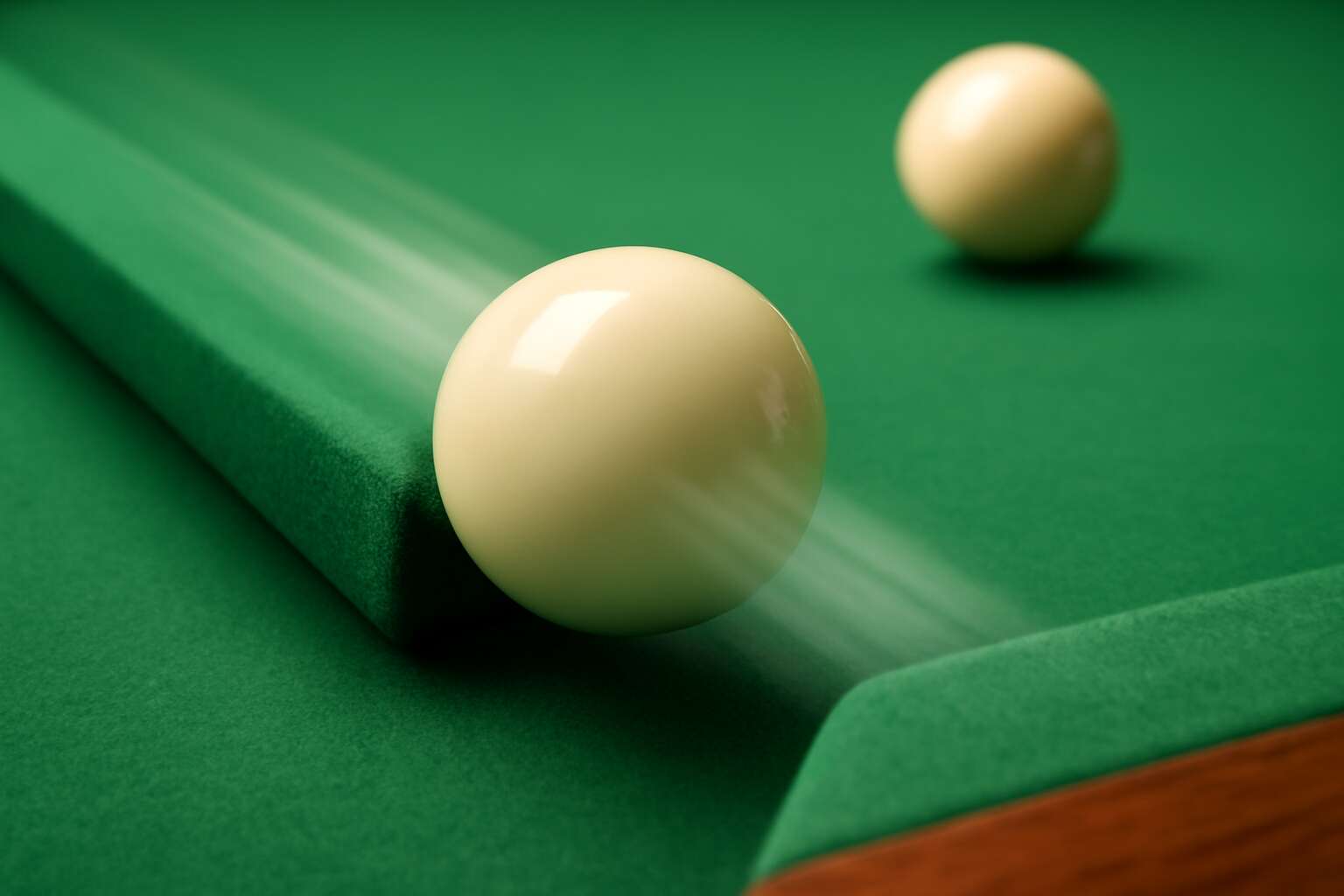
Rebound physics fundamentals on a pool table
Angle of incidence and reflection in billiards
Across South Africa’s billiard rooms, eight in ten successful pots hinge on angle intuition rather than luck. That rebound like a ball on a pool table becomes poetry when incidence and reflection align, and the cue ball whispers the table’s secrets.
I keep a wary eye on the fundamental rule: the angle of incidence equals the angle of reflection in an ideal bounce. On felt and rubber, reality introduces spin and speed quirks, turning theory into a subtle performance.
- Incidence symmetry explains cushions mirroring the incoming path.
- Spin can skew the apparent angle, altering the aim’s look.
- Cushion elasticity and cloth texture subtly alter the rebound.
These ideas travel beyond the table, shaping conversations in clubrooms and broadcasts alike. I’ve learned to value these subtleties; they shape more than a single shot and invite a courteous nod to the game’s quiet mathematics.
Impact forces and energy transfer to the cue ball
Energy meets timber and cloth in a fleeting conversation when the cue strikes the ball. Impact force transfers momentum with a fleeting, almost poetic precision, and the table answers with a springy return. The rebound like a ball on a pool table is less a trick of luck than a whispered balance of mass, speed, and elasticity—an instant that carries momentum across the felts.
- Impulse and force: a sharper hit produces a brisker, bolder bounce.
- Elasticity matters: the coefficient of restitution decides how much energy remains after contact.
- Spin and surface: friction, texture, and contact time tilt the perception of the path.
In South African clubs and broadcasts, these tiny exchanges read as larger stories—structuring rhythm, pace, and the quiet mathematics behind every frame. The idea of rebound like a ball on a pool table echoes in curious corridors.
Spin, friction, and rebound behavior
“Momentum wears felt and never shouts,” a veteran club coach in the Free State says. To understand rebound like a ball on a pool table is to watch how tiny forces nestle into the grain of the table as players lean into rhythm and quiet math.
Spin, friction, and rebound behavior unfold in a heartbeat after contact: a cue ball’s twist can bend its path, cloth friction tugs at the felt, and the table’s elasticity hands energy back with a sigh.
- Spin direction and speed alter post-collision paths
- Friction with cloth shapes speed and cushion bounce
- Impact duration and surface elasticity set the rebound’s tone
In South African clubs, these subtle shifts narrate larger stories—rhythm, patience, and the quiet mathematics behind every frame, a local poetry of motion, shared over tea and chalk.
Influence of table conditions on rebound outcomes
Cloth type and wear effects on bounce
Speed and fate share a table leg’s quiet whisper. Every break becomes a lesson in surface history. The rebound like a ball on a pool table is less about fortune and more about how the felt remembers every strike.
Cloth type and wear shape memory. Woolen and worsted blends interact with the cue ball differently, influencing friction, speed, and the lift at contact. As wear deepens, tiny grooves form, changing how the ball grips the cloth and rebounds.
- Cloth composition: woolen, worsted, or mixed blends
- Wear pattern: uniform versus localized wear altering bounce consistency
- Nap direction and surface texture: how friction varies with spin
South African tables carry a climate, but the physics is universal; the table’s heartbeat—its cloth and felt—speaks to the player in the same language of intent. The texture underfoot is a mirror, inviting you to listen to what the ball says!
Cushion geometry and rebound angles
Across South Africa’s snooker halls, cushion geometry is the quiet referee. A small tilt in the rails can tilt the outcome; even the sharpest break can wobble if the cushion isn’t singing in tune. In competitive play, a four-degree swing in rebound angles isn’t cute trivia—it’s real, measurable momentum that reshapes the table’s story.
Cushion geometry and rebound angles hinge on radius, foam density, and how the rail is mounted. A tighter radius yields a sharper bounce; a softer foam absorbs energy, softening the return. The result is a predictable or surprising repulsion, and sometimes a sly bounce that lets you rebound like a ball on a pool table.
- Cushion radius and corner geometry
- Rail height consistency and joint alignment
- Attachment quality and foam density at contact zones
In South Africa and beyond, the physics is universal; the table simply speaks the language of intent.
Differing rebound between cue ball and object ball
Across South Africa’s snooker halls, rebound variance haunts the table—about a 4% swing when conditions shift. The cue ball and the object ball carry different mass, so the same cushion click can send them along divergent diagonals, a reminder that the table speaks with two voices.
- Ambient humidity and temperature subtly alter cushion elasticity and rail feel
- Wear patterns and joint looseness tilt rebound consistency
- Surface cleanliness and chalk residue shape contact dynamics at impact zones
These conditions invite you to move with the table, to rebound like a ball on a pool table. The two balls tell a shared tale with two cadences, guided by the table’s quiet atmosphere.
Role of surface lubrication and chalk in spin transfer
Across South Africa’s snooker rooms, even micro shifts in humidity and rail temperature tilt rebound outcomes by a few percentage points, enough to tilt frames under bright club lights. When cushion elasticity softens or tightens, the path of a shot can bend unexpectedly, reminding players that tables speak through both rails and felt.
Surface lubrication and chalk residue are quiet conductors of spin transfer. Tiny slick layers on contact zones can dampen or amplify impact, altering where the cue ball curls after impact; chalk on the cue tip enhances grip but leaves trace slickness that shifts the moment of contact.
- Lubrication on cushions and rails changes friction pockets
- Chalk residue on contact areas can alter spin transfer patterns
- Felt cleanliness and dust influence slip and bite at impact zones
Mindful of these dynamics, players adjust rhythm, tempo, and aim, letting the table guide their hand to rebound like a ball on a pool table.
Techniques to control and predict rebounds
Angle-based aiming for bank shots and caroms
In South Africa’s pool halls, the rebound is more than chance; it’s a quiet map of possibilities. Techniques to control and predict rebounds hinge on angle-based aiming for bank shots and caroms, turning pressure into precision!
Practice rhythm and geometry: observe the point of contact, then balance cue speed with the twist of spin to guide the ball along the desired exit line.
- Align your aiming line with the cushion to forecast the rebound angle
- Modulate speed to compensate energy loss on contact
- Use subtle side spin to influence the second contact with the object ball
With intention, you rebound like a ball on a pool table, turning physics into flow that reads the table rather than fighting it.
Using side spin to shape rebounds
Across South Africa’s pool halls, the rebound isn’t luck—it’s a readable map. I’ve seen spin, speed, and the kiss of the cushion turn chaos into choreography; rebound like a ball on a pool table becomes rhythm you can tap into. When you’re in the groove, shots unfold with a quiet, deliberate grace.
- Side spin interacts with the second contact in a way that shapes the rebound.
- The relationship between cue speed and energy transfer becomes visible in the observed bounce.
- The cushion contact and the exit line jointly forecast the rebound path.
With intention, you read the table and let the line guide you, not vanity. Over the years, I’ve found that spin subtly shapes rebounds, turning pressure into precision and keeping the table’s dialogue in your favor.
Speed control and its effect on bounce
In South Africa’s pool halls, speed is the language of the rebound. “Speed is the language of the rebound,” a line you hear as chalk settles and cues rise. The rebound like a ball on a pool table reveals its rhythm when tempo is trusted.
When you push the cue ball with speed, the cloth’s breath is brief and the exit line feels direct; energy travels forward and bounce sharpens. At slower tempos, friction and subtle spin tug at the path, softening the arc and adding nuance to the bounce.
With eyes trained on the table, the rebound like a ball on a pool table becomes readable, a quiet dialogue between pace, place, and patience that rewards calm, measured tempo over bravado.
Shot selection strategies for predictable rebounds
Across South Africa’s pool halls, tempo rules the table and the mood. The rebound like a ball on a pool table becomes a pulse you can hear—the kind of rhythm that helps players predict where the cue ball will land. A nearby study notes players who plan ahead win about 40% more often in clutch racks. In this dance, tempo is a compass, guiding exits and returns with quiet fidelity.
- Tempo guides the exit line toward a calm, predictable arc.
- Seek contact points that invite symmetry and balance.
- Read cushions as characters shaping each rebound’s mood.
- Choose lines that merge safety with controlled momentum.
In this lyrical craft, shot choice becomes a philosophy rather than a checklist. Respect the table’s memory, and the rebound will tell its tale with measured grace.
Drills to master cushion rebounds
These techniques to control and predict rebounds hinge on listening to the table and interpreting its whispers. A local SA study notes players who drill cushion rebounds gain roughly 12% more accuracy in clutch racks. Master those cues and you can rebound like a ball on a pool table—steady, predictable, almost musical.
- Soft-cushion grazing: the concept of nudging the cue ball toward the rail with a light, centered stroke to encourage a controlled, near-symmetric rebound.
- Rail alignment: understanding how the cue path interacts with the cushion so returns align with your intended line.
- Bank-line replication: visualising the cushion path and rehearsing returns along that coined line to build consistency.
These ideas turn cushion work into rhythm, letting the rebound tell its own story rather than forcing a break in the flow.
Common rebound issues and troubleshooting
Inconsistent bounce due to shot misalignment
On a night-black table, rebound issues creep like frost. Inconsistent bounce often wears the mask of shot misalignment, turning a clean contact into a spectral misfire. When the aim line drifts from the true path, the cue ball refuses the intended path and the result is a tremor in the geometry—a rebound like a ball on a pool table that refuses to follow the script.
Common indicators include:
- Off-aim impact that should have followed the line but betrayed it
- Unpredictable rebound angles when the ball meets cushions due to slight misalignment
These clues remind us that the shadow world beneath cloth hides a precise geometry; reading it is a dance of perception, where alignment shapes the true path and steadies the rebound.
Mishits and miscue effects on rebound paths
Common rebound issues sneak in like frost on a black cloth, turning clean hits into eerie echoes. When a miscue shadows the stroke, the cue ball refuses the intended path and the rebound like a ball on a pool table, drifting away from the plan.
Common miscue effects include:
- Subtle cue-tip contact shifts the impact point, bending the trajectory in unpredictable ways.
- Speed misjudgment makes the ball cling to rails or overshoot distant aim points.
- Unintended side spin from a miscue skews the rebound, especially near cushions.
The shadow geometry hides in the cloth, and reading it is a quiet, disciplined art. South African players understand this dance, letting the table whisper truths about where the rebound path will land and how a touch of miscue can rewrite the arc.
Maintenance cues that affect bounce reliability
Bounce reliability matters more than most players admit. In South African clubs, a typical table can show a 20% bounce variance from fresh cloth to mid-wear, enough to turn a simple carom into a misread line. The quiet clues are in maintenance cues that expose how the table answers a hit. When the cloth wears, the rebound like a ball on a pool table loses its predictability, and even a confident stroke can surprise you.
Common maintenance cues to watch include:
- Shiny wear patches where the cue ball repeatedly travels, bending the expected bounce
- Rough edges or loosening rails that create uneven rebounds near cushions
- Dust, chalk residue, or lint collecting on the surface that alters friction
Environmental factors—humidity, temperature shifts, or a warped slate—quietly shift the arc, demanding an eye for how the table wants to land the ball.

0 Comments