Understanding the Design and Functionality of Peg-Based Tables
Anatomy of a Peg-Panel Playing Surface
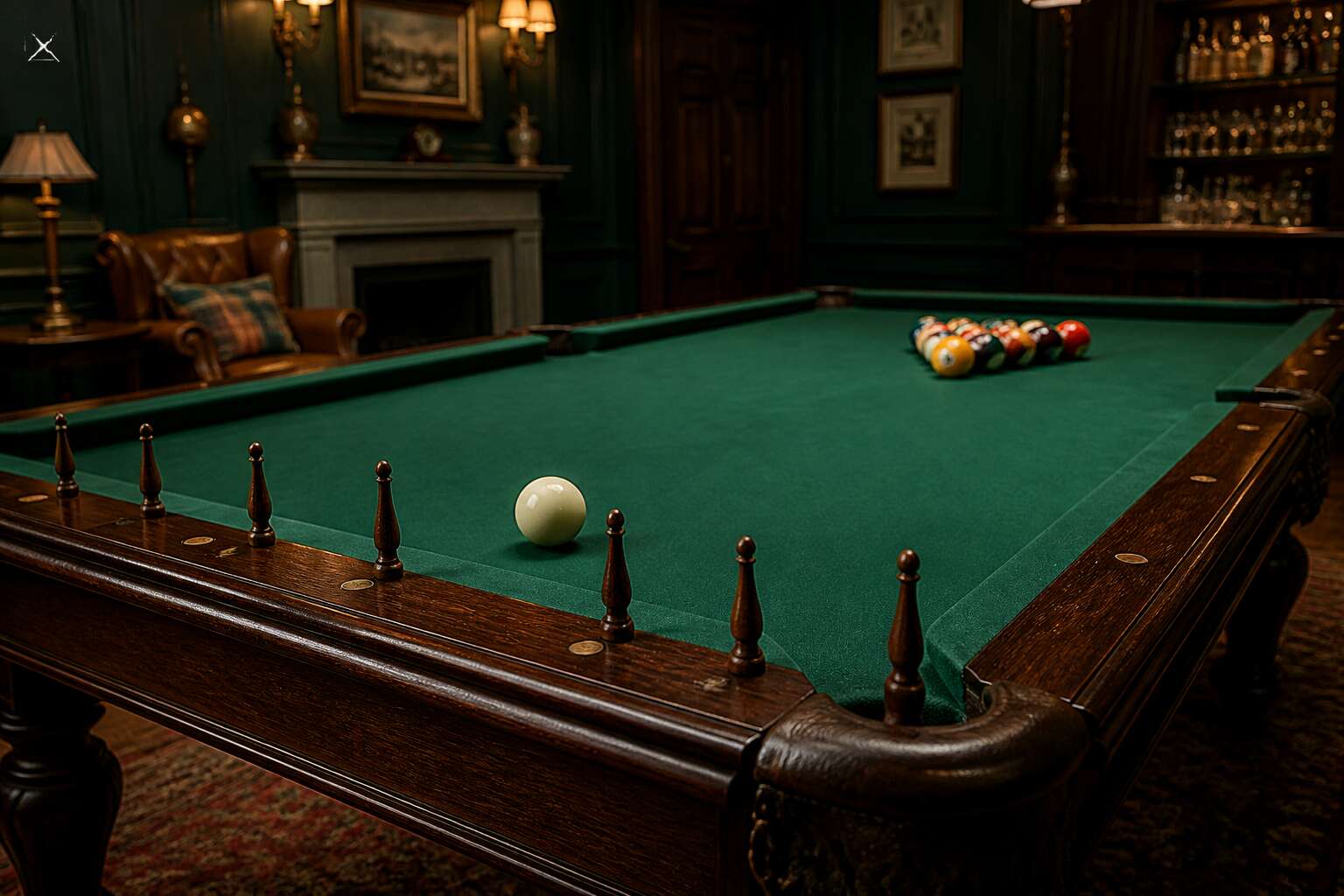
Most people imagine a pristine slate surface when they hear the term billiards. A pool table with pegs swaps that smooth stretch for a perforated grid. The anatomy begins with the peg-panel playing surface, a dense board drilled with a precise array of sockets. Each socket holds a peg that can sit flush or rise under finger pressure. The genius is the locking mechanism. I have seen coil springs underneath jam the peg into place until a ball delivers a sharp impact. Some panels use a rubber gasket to silence the clicks and reduce ball hop. This construction alters rebound trajectories and speeds, which is the whole point. Here is what to inspect on any such table:
– Hole spacing, usually 40 or 50 millimetres
– Peg material, hardened plastic or steel
– The backing plate, which must be removable for debris
A well made peg-panel surface challenges your aim because every peg becomes a static hazard. Owning a pool table with pegs means accepting that deflection is part of the game, not a flaw.
Scoring Mechanisms: How Pegs Track Your Game
Every peg that sinks beneath a ball’s impact records your accuracy. I have spent evenings at a Johannesburg social club watching players interpret the grid. A pool table with pegs uses this depression pattern to create a scoring method that rewards precision over power. The mechanism is straightforward. A spring-loaded peg completes a circuit when pressed, and that signal updates a display or a simple tally on the side rail.
How the table counts your game:
- Peg depth, which distinguishes a glancing contact from a solid strike.
- The order of impacts, so you can map a combination shot.
- The final peg, which often marks the winning score.
Peg Materials and Durability Considerations
At a busy Johannesburg club, a single peg can register more than 4,000 impacts in one season. That durability comes from material choice. Most quality pool tables with pegs rely on hardened steel or brass studs. Brass resists corrosion in coastal cities like Durban, while hardened steel handles the dry Highveld climate. The spring mechanism matters equally. A fatigue-tested spring keeps rebound predictable over thousands of depressions.
Design decisions affect how the table reads your play. Shallow wells collect chalk dust, so manufacturers machine deeper channels with drainage gaps. The peg’s travel distance, typically 3 to 5 millimetres, determines the threshold between a glancing touch and a registered strike. Some tables let you tune this travel.
These factors define how a pool table with pegs ages:
- Peg alloy composition and plating thickness
- Spring fatigue rating and replacement ease
- Well depth relative to local humidity
Common Game Variants for Peg Tables
One thing most players miss is that the peg grid is not a one-size-fits-all layout. A table tuned for speed pool will have tighter peg spacing, while a rebound-heavy design suits games like killer or banker. When you buy a pool table with pegs, you are actually buying a specific set of game rules.
Common game variants push this further. For example, rotation pegs award points based on ball order. Other bar games demand a specific peg depth to prevent accidental scores. If you play at a club in Soweto, you might find a hybrid variant using two balls and a single scoring row.
- Speed pool: tight peg spacing for rapid scoring
- Killer: deeper wells to reduce false triggers
- Rotation: sequential peg banks
The peg pattern defines the game. I have seen a player lose a match because their pool table with pegs was configured for a different variant.
Benefits and Drawbacks of Choosing a Pegged Billiard Table
Enhanced Gameplay Dynamics
Fewer arguments over phantom caroms is one immediate reward. A pool table with pegs transforms disputes into objective fact, which changes how friends and strangers interact around the felt. The game becomes a conversation about angles rather than a debate about luck.
The sensory feedback is another layer. When a peg clicks, it confirms your execution instantly. That direct response accelerates skill development because you learn precisely how much spin or pace creates a score. You feel the physics in your hands.
However, this mechanical precision demands a certain financial commitment. A quality peg table requires robust engineering to keep the sockets from wearing loose after years of play. Cheaper models rattle and lose their calibration, which defeats the purpose. You must also accept that the pegs catch balls that might otherwise travel across the cloth, altering the legacy of traditional bank shots. It is a trade-off between classical purity and modern clarity. Experience both, and you will pick a side.
Aesthetic Appeal and Craftsmanship
Thousands of hours of joinery separate a pool table with pegs from a toy. The inlaid pegs gleam in their brass mounts, and each socket is cut to a thousandth of an inch. That precision is not incidental! A craftsman balances the circular geometry of the playing field with the visual rhythm of the pegs, turning a utilitarian surface into a display piece.
Yet beauty demands a premium. Exotic hardwoods and half-blind dovetails raise the price. Lighter veneers hide dents less forgivingly. And the sockets, however elegant, will eventually loosen if the maker cuts them shallow. You must examine how the table tolerates humidity, a notorious issue in Cape Town’s coastal air.
- Check the socket liners: brass or steel outlasts wood.
- Demand a sealed finish on the peg field.
This scrutiny separates a genuine heirloom from a passing ornament.
Storage and Portability Issues
A pegged table demands commitment. The benefits are tangible. You get precise scoring and tactile feedback every time a peg clocks your shot. But those same pegs complicate relocation.
A pool table with pegs weighs up to three times more than a standard model. The reinforced peg field and brass socket liners add serious mass. Moving companies quote extra. Some refuse outright.
Storage is another matter. Cape Town’s humidity attacks the socket liners. You need a climate controlled space, stable between 18 and 24 degrees.
The costs stack up:
- Disassembly requires a certified technician
- Specialist movers charge premium rates
- Insurance premiums account for the precision components
A pool table with pegs rewards daily play. It punishes neglect. The choice hinges on whether your lifestyle supports the weight of it.
Maintenance Requirements for Pegs
Once you accept the weight, the question becomes upkeep. The benefits of a pool table with pegs appear the moment you break. Scoring is automatic, tactile, and indisputable. I have watched players argue over a close shot, then fall silent when the peg confirms the result. The drawbacks are quieter. Maintenance is a weekly ritual, not an occasional chore. The peg field collects chalk dust and cloth lint, and that residue stiffens the pins. The upkeep is straightforward, but it is non-negotiable:
- Wipe the peg panel with a dry microfibre cloth after each session
- Lubricate the springs monthly with a silicone-based product
- Check the brass socket liners for corrosion in coastal humidity
The cost of skipping these steps is audible. A dull thud replaces the crisp click, and the scoring accuracy drifts. A pool table with pegs demands this attention, but it rewards you with years of precise play. Owners who accept the weekly ritual rarely regret it.
Cost Comparison vs. Standard Tables
The French might have given us the word “billiard,” but the wisdom of weighing costs is pure South African prudence. When comparing a pool table with pegs against a standard model, the initial sticker price is the first consideration. You will pay a notable premium for the integrated scoring system, because the engineering is more complex. Yet this figure needs context.
Consider the financial scale of upkeep.
– The peg panel requires specific lubricants and cleaning tools.
– The mechanical components may need specialist servicing over time.
– Standard tables demand cloth and cushion replacement, which also costs money.
The long-term economics favour the pegged table. Your standard table offers no echo of your performance, no verification of a lucky stroke. A pool table with pegs provides that feedback, and the value of a perfect shot being confirmed without debate is real. Furthermore, resale value holds for well-maintained peg tables. This is a smart investment for the serious player, but be honest about your habits. If you prefer a casual setup with lower initial risk, a standard table is a safer bet. If you crave a permanent fixture that quantifies every session, the extra expense is justified. Just remember to budget for a padded cover. Dust is the enemy of precision.
How to Purchase the Right Peg-Equipped Table for Your Needs
Key Factors to Evaluate Before Buying
There is a certain romance to the idea of a pool table with pegs, but the reality of your lounge floor is far less forgiving. Before you commit to this elegant monstrosity, consider the geometry of your space, not just the aesthetic. You need a clear perimeter for your cue swing, which means measuring the room length and width, then subtracting the table’s dimensions. A common mistake is forgetting that the peg mechanism often extends beyond the standard slate footprint. This oversight turns a social centrepiece into a cramped hazard.
Safety should also dictate your layout, especially if you have a bustling household. The protruding pegs, while charming, are perfect for catching a stray elbow or a child’s hip during a spirited game of hide and seek. You must ensure there is a dedicated circulation path that avoids the playing area entirely. Furthermore, consider the ambient temperature of the room. Sudden changes in humidity can warp the wooden surround, causing the pegs to bind in their holes. For the South African climate, a stable, shaded room without direct sunlight is non-negotiable for preservation.
Finally, think about the logistics of the delivery. A table of this magnitude is not a flat-pack affair. The installation crew will need a clear, wide path through your doorways and down the passage. You will want to confirm that the table can be disassembled into manageable parts if your staircase is narrow. Any delay or problem here results in a hefty additional fee, so it is wise to communicate these details in advance.
Here is a short checklist of physical requirements you should verify before you sign any delivery docket:
– The width of every doorway and stairwell on the route.
– The floor type and whether it can support the table’s weight without reinforcement.
– The ceiling height for the cue extension during vertical shots.
– The proximity of lighting fixtures to the play surface.
It is also prudent to consider the table’s finish in relation to your daily life. A high-gloss lacquer will show every dust mote and fingerprint, demanding constant attention. A matte or satin finish, while less ostentatious, is remarkably forgiving in a busy home. Ultimately, the right purchase is the one that fits your habits, not just your décor. A pool table with pegs should invite play, not incite panic about scuffs on the rail. Weigh these factors with the same gravity you would apply to a new car, and your investment will return years of quiet satisfaction.
Sizing and Room Space Requirements
One reliable rule for buying a pool table with pegs is to calculate the cue’s arc before you glance at the finish. I always tell buyers to add 150 centimetres to each side of the playing surface, because the peg mechanism extends farther than most assume. Measure your room’s length and width with that margin in mind.
Next, inspect the floor for levelness. A sagging floor skews the peg slots and sends balls off course. Use a spirit level across the intended footprint. For carpeted lounges, confirm the underlay compresses evenly.
- Measure the playing area, not the outer frame.
- Add the cue length plus 20 centimetres for the backswing.
- Check the clearance from any wall or window sill.
A pool table with pegs will dominate a small room, so compare the measured clearances against your largest cue. Your decision rests on these numbers.
Accessories That Complement Peg Tables
The heart of a good purchase often lies in the details that are easy to overlook. Attachments and add-ons can transform a simple playing field into a more engaging experience. One of the most practical additions is a set of specialty cues designed for the tighter angles that the peg divots create. The peg mechanism itself can also support a custom bridge, which is a tool that becomes indispensable during long-range shots. Many owners forget that the wooden side rails are perfect for mounting a magnetic scorekeeper.
To make a wise investment, consider how the table’s unique engineering supports your play style.
– The central peg slots can double as a ball return channel for specific game modes.
– Tension knobs on the side allow for quick peg adjustments without moving the entire table.
– A recessed tray beneath the playing surface helps store removed pegs, which speeds up game set-up.
Lighting is another factor that changes the entire experience. A low-hanging pendant lamp with a warm bulb illuminates the peg shadows, making it easier to read the angles. In South Africa, where load shedding is a reality, a table with a battery-operated LED strip adds convenience. This strip can be attached directly to the frame and will keep the game going when the power cuts. Remember to clean the peg holes before you pack the table away, as dust will dull the glow. Groups often find that a felt brush with a curved head reaches into those small recesses without damaging the cloth. Choosing these accessories wisely will make the table feel like a permanent fixture in your home.
Reading Product Specifications and Reviews
When you read a specification sheet, the numbers only tell half the story. A pool table with pegs demands scrutiny beyond the rail width and cloth grade. In South Africa, where humidity fluctuates wildly, the peg tolerance matters more than the brand name. I have learned to look for the slot depth specification before trusting the advertised playfield size.
The reviews section often reveals the truth. Previous owners will mention whether the pegs stick during damp evenings or if the tension knobs loosen after a few months. Look for patterns across multiple reviews, not isolated complaints.
Here is what I check before committing:
– The peg slot tolerance, measured in millimeters
– The weight of the table frame, which indicates stability
– The warranty terms for the peg mechanism itself
– The assembly instructions, specifically the peg alignment section
A thorough reading of the product reviews will save you from a costly mistake when you buy a pool table with pegs.
Top Manufacturers to Consider
Purchasing a pool table with pegs is rarely a spontaneous decision. The market offers a spectrum of quality, and the difference between a temporary novelty and a lifelong centrepiece lies in the details. I have seen players fall in love with the aesthetic of a peg table, only to discover that the mechanism is poorly suited for the high traffic of a family games room. The choice hinges on construction integrity and the reputation of the workshop behind the brand.
South African manufacturers have become adept at crafting tables that withstand local conditions, but imported brands often struggle with the coastal humidity. When I consider a pool table with pegs, I look for a frame that offers solid weight and a peg housing unit that does not rely on plastic clips. A bolt through system is more reliable than a snap fit design. Here is what separates a worthy investment from a regrettable one.
– The guarantee covers the peg mechanism for at least five years
– The brand offers local servicing without shipping delays
– The dealer provides a trial period for play testing
A reputable brand will not shy away from discussing the tolerances of their slots. The top tier manufacturers in this space have shifted towards CNC routed panels, which offer a precision that hand cut versions cannot match. This precision affects how the ball rolls and how the peg reacts on impact. For the serious buyer, the power source for electronic scorekeeping is another consideration. During load shedding, a table that relies solely on mains power becomes useless. Seek a unit with a battery backup or a purely mechanical system.
The best advice I can offer is to trust the weight of the table. A lightweight frame suggests hollow internals, which will amplify the sound of the balls and reduce the overall feel of quality. A heavier table absorbs the shock of the impact, allowing the pegs to operate smoothly without vibration. When you find a pool table with pegs that feels like a piece of furniture, rather than a toy, you have found the right manufacturer. The decision is a balance between personal taste, practical durability, and the craftsmanship that you can feel with your own hands. Invest in the table that promises longevity, not just the lowest price.
Budgeting for Your Investment
The moment the price tag lands in front of you, the conversation usually shifts. A pool table with pegs commands a premium that many first time buyers underestimate. I have watched shoppers anchor themselves to the base model, only to realise later that the frame lacks the heft needed for serious play. You are not just paying for a playing surface; you are funding a precision mechanism that must tolerate years of side spin and hard breaks.
Budgeting for this purchase requires a clear head about what you actually need. A table designed for a quiet lounge can be entirely different from one destined for a busy entertainment area. The financial outlay should reflect your usage frequency, not just the initial appeal of the peg system.
– Transport and installation fees, which can add 15% to the total cost
– Replacement peg sets, as the cue ball will inevitably find the weakest link
– A dehumidifier for coastal regions, which protects the slate bed and wooden rails
Local suppliers often offer better value on the servicing side. A lower import price might be swallowed by shipping costs for a warranty claim. When you break it down, the real investment lies in the table’s ability to hold its calibration. A peg that misfires is a source of frustration, and correcting that issue after the honeymoon period is over can be a costly affair. The price is a promise. Make sure the seller is capable of keeping it.
Care, Maintenance, and Customization of Your Peg Table
Cleaning the Playing Surface and Pegs
Many owners overlook the crevices where pegs meet the playing surface. Those tiny gaps collect chalk dust and oils from your hands. I recommend a soft microfiber cloth for the felt and a cotton swab for each peg. For stubborn residue, use a gentle wood cleaner.
- Wipe the surface after every game.
- Swab the peg bases weekly.
Customizing your table goes beyond aesthetics. You can replace wooden pegs with brass for a brighter sound, or add a protective clear coat. These small changes prolong the life of your pool table with pegs and keep every game feeling fresh.
Replacing and Refinishing Peg Components
Pegs endure every strike, and their finish eventually wears thin. I have seen South African players ignore this until the wood splinters. Replacing a peg is straightforward: twist out the old one, check the collar, and insert a new peg of the same diameter. Brass or acrylic replacements change the tactile response, but they also alter the game’s rhythm.
For refinishing, remove each peg and sand with fine grit. Apply a thin coat of beeswax or polyurethane, then let it cure for a full day. A polished peg reduces friction and protects the felt from scratches. Your pool table with pegs stays precise when the components move freely.
- Inspect pegs for cracks every three months
- Use a toothpick to apply adhesive to loose bases
- Label pegs by position so they return to the same slot
Refinished pegs feel smoother and look richer. Your pool table with pegs demands this attention.
Adjusting Peg Tension and Alignment
The soul of a peg table lies in the subtle resistance each wooden dowel offers. When you strike the cue ball, the immediate feedback from the pegs tells you everything about the shot’s velocity and spin. Most players notice the feel without understanding its source, but the true aficionado knows that rotational tension is the silent language of the game.
Tension adjustment begins with the collar mechanism beneath the playing surface. If a peg spins too freely, it robs the impact of its authoritative snap. On the flip side, a peg that binds against its housing deadens the rebound and makes the table feel sluggish. The optimal state is a slight, deliberate friction that holds the peg in place during vigorous play yet releases with a satisfying click when struck.
Alignment is another beast entirely. A peg that sits proud of the surface by a millimetre will deflect balls unpredictably, creating a subtle but damaging inconsistency across the table.
– Check the vertical plumb of each peg using a straight edge placed across the playing field
– Ensure the tapered base seats flush against the collar without any visible gap
– Rotate the peg 360 degrees and feel for flat spots that indicate wear on the alignment shaft
The torque method for adjusting tension is simple: use a small hex key inserted into the base collar and turn clockwise to increase resistance. Counterclockwise loosens the grip. Do this in quarter turns only. A half turn can overstress the collar threads and compromise the entire housing assembly.
Materials also dictate how tension adjustments hold over time. Resin-based pegs maintain their dimensional stability far better than untreated hardwood, which can swell or shrink with the humidity changes found in Johannesburg winters. Acrylic pegs offer a harder strike but transmit less feel to the fingers, making fine adjustments more difficult to gauge by touch alone.
I always recommend testing any tension change with a full rack of balls rather than a single shot. The interaction between multiple impacts reveals alignment irregularities that individual strikes mask completely. A proper setup makes your pool table with pegs respond consistently across every corner of the playing field. The table rewards patience here, and the precision you dial in today becomes the dependable character you rely on during competitive play tomorrow.
Customizing Peg Layouts and Patterns
Most players never touch a peg once the table arrives. They treat the factory layout like scripture, which is amusing because those pegs were arranged by a bored warehouse worker in a hurry. Customizing your pool table with pegs is where the real sport begins. I once shifted a single peg by two inches and turned a predictable rebound into a geometry lesson that left my opponent muttering about witchcraft.
- Place pegs to defend the pockets you favour.
- Leave a gap that looks inviting but spits balls toward the cushion.
- Cluster three pegs near the centre to punish lazy power shots.
Consider the psychological warfare of a deliberate layout. Every rearrangement demands a quick check for loose collars and rising dowels. A pattern that shifts mid-game is not a strategy, it is a loose screw. Respect the modular nature of your pool table with pegs, and it will reward your eccentricity.
Protecting the Table from Wear and Tear
Pool tables with pegs develop wear patterns that ordinary tables never show. The felt around each collar frays first, especially near the pockets. I once found a dent in the wood under a loose peg, a sign of months of neglect.
Protection starts with brushing the surface after each session. Feel around each peg base. If the dowel shifts, tighten it before the collar scratches the timber. In South Africa’s dry winters, wood shrinks, so apply a light coat of lemon oil to the rail edges once a season.
- Check peg collars monthly for movement.
- Use a felt-safe brush instead of a cloth.
- Store the table away from direct sunlight.
Customization should never compromise the carcass. When moving pegs for a new layout, plug old holes and sand flush. A pool table with pegs rewards that attention. The surface stays true, and every rebound shows the care.

0 Comments