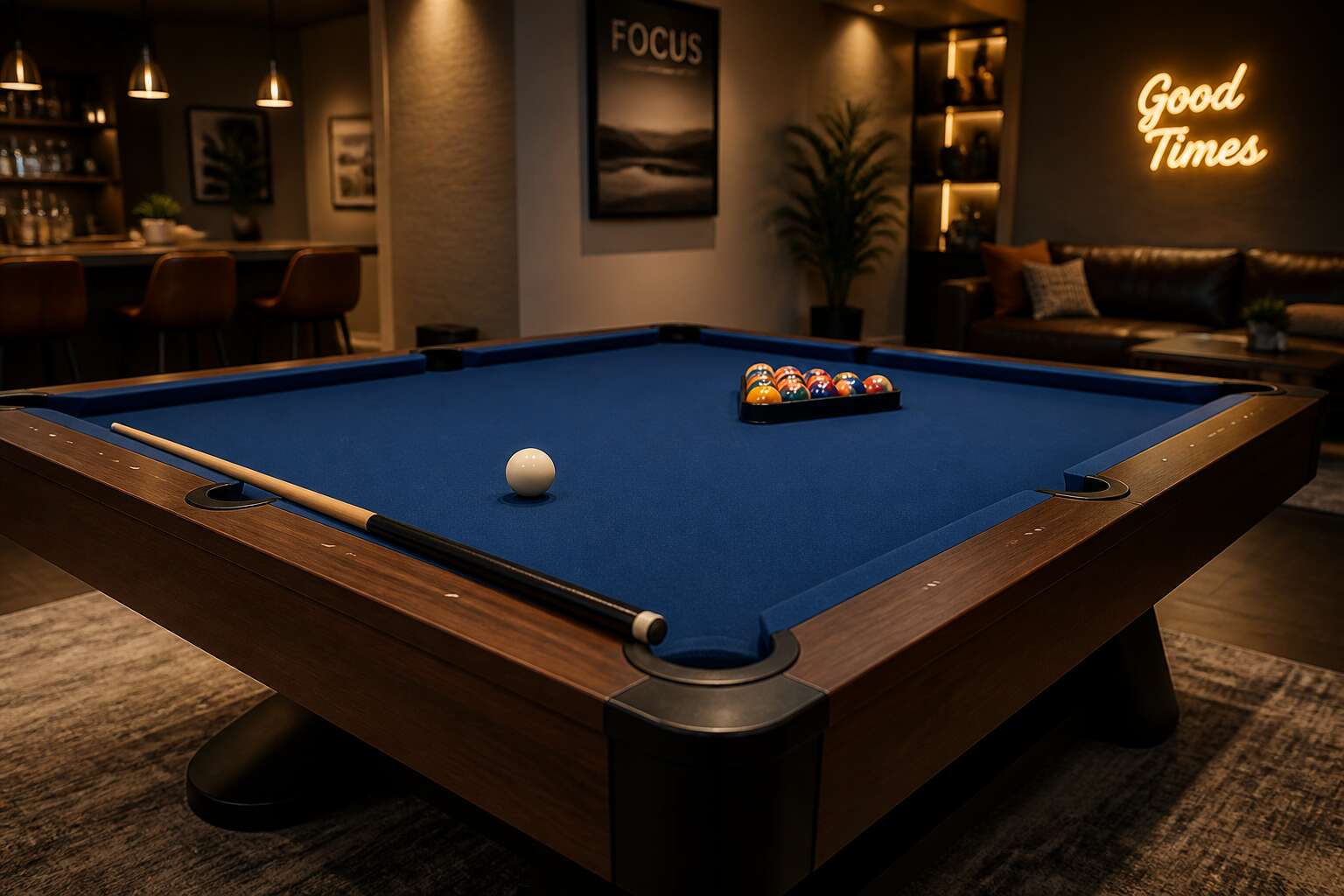
Evaluating the Condition of a Used Pool Table
Checking the Slate and Frame
Few sights are as seductive as a bargain on a pool table used in a bustling Johannesburg bar or a quiet Cape Town homestead. Yet, beneath the felt lies the true story of its endurance. The slate is the soul of the table; run your hand across its surface to feel for undulations or, worse, cracks. A hairline fracture in the three-piece slate can distort every shot you play, turning a simple cut into an unpredictable gamble. This is where the real value is measured.
The frame, the unsung skeleton, demands equal scrutiny. A wobbly leg or a sagging beam signals a history of hard living. Carefully inspect the corner joints for any sign of separation or water damage, which can silently compromise the entire structure. Look for these specific red flags:
1. Any visible gaps where the wooden rails meet the frame.
2. Signs of pest damage, which often appears as fine sawdust.
3. Rust or corrosion on the bolts that secure the slate to the frame.
A table with a compromised frame will only worsen over time, no matter how pristine the cloth appears. The most costly errors often come from ignoring the quiet hum of a stressed joint. Trust the integrity of the wood, for it is the true guardian of the playfield. This careful inspection is the only way to guarantee that your investment in a pool table used for years to come will remain a source of pleasure, not a monument to repair costs.
Inspecting the Playing Surface and Cloth
A pool table used in a smoky Durban hall often carries burns or nicks, but the deeper treachery lies in the wear pattern. Run your palm across the playing surface; the cloth should feel uniform, not slick or shiny in patches. That sheen indicates a table that has seen punishing hours of play.
The cushions deserve equal attention. Press your thumb into the rubber; it should spring back with authority. A tired cushion will feel dead and unresponsive, turning even simple positional play into a frustrating exercise. Also, examine the pockets for loose netting or damaged leather, which can cause balls to spit out unexpectedly. Consider these signs:
- Discoloration that spreads unevenly across the cloth.
- Frayed edges where the cloth meets the cushion.
- Ball burns, which appear as shiny, compressed paths.
These imperfections speak to the life of a pool table used for many seasons. I have walked away from many a promising bargain because of a surface that felt like sandpaper.
Examining the Cushions and Pockets
Reach into the pocket and feel the leather. A pool table used in competitive play shows its history there. The cushion rubber should resist your thumb with a firm spring. If it feels sluggish or cracked, the rebound is gone. The pocket liners must be secure. Loose netting or split leather will spit balls back at you. Watch for these signs:
- Bulges or flat spots on the cushion faces.
- Staples protruding from the rail cloth.
- Pocket openings stretched out of shape.
A table with tired cushions and ragged pockets is a poor investment. Play quality suffers, and replacement costs quickly exceed the purchase price. I have passed on many so-called bargains because the cushions felt unresponsive. The pockets told the same story. That combination signals a table past its prime.
Assessing the Legs and Leveling System
A pool table used for years shows wear in the legs. A solid frame means nothing if one leg wobbles. I press down on each corner and listen for creaks. The leveling system, often adjustable feet or shims, must turn without stripping. Rusted threads or cracked wood around the bolts are warning signs.
- Uneven gaps between legs and the floor.
- Caster wheels where fixed feet should be.
- Drill holes from previous adjustments.
A table that sways under gentle pressure will only worsen. The slate may sit level, but a weak leg distorts everything. In South Africa, humidity shifts with seasons, so a robust leveling system matters. A pool table used in a residence needs accessible mechanisms for regular tweaks.
Key Considerations Before Purchasing a Used Pool Table
Budget and Price Range
South Africa’s used billiard market is full of surprises, and none of them are cheap! A pool table used might carry a sticker price of R3,000, but the real cost includes moving it up staircases, replacing the cloth, and praying your floor is flat. Budgeting for a second-hand table means planning for its hidden expenses.
Start with your maximum number, then subtract your patience. Transport alone can exceed R1,500 if the seller lives on a hill. A pool table used from a bar will need new felt, which costs more than you expect. Factor in the cost of a professional setup if you value your sanity.
- Delivery and installation charges
- Replacement cloth and cushion rubber
- Leveling shims and tools
Set a realistic price range that absorbs these extras. Your bank balance will appreciate the honesty.
Size and Space Requirements
Measure the room before you measure the table. A pool table used on a whim often lands in a lounge that cannot accommodate it. You need roughly one and a half metres of clear space around every side for a comfortable backswing. That means an 8 foot table demands a room of at least 5.2 by 4 metres. Most South African homes have a wall, a pillar, or a bar counter that destroys those numbers.
Ceiling height matters too. A standard cue stands 145 centimetres tall, so anything below 2.7 metres makes tall players hunch. Doorways and stairwells on the delivery route require checking as well. The table can be broken down for transport, but the room will not shrink.
If space is scarce, a 7 foot table fits better. Playing on a pool table used at that size changes shot angles and pocket behaviour, so adjust expectations accordingly.
Brand and Quality Reputation
In the secondhand market, the maker’s mark is your first compass. A pool table used from a trusted South African or international brand often promises better tolerance in its joints and honest slate. Reputation is earned through decades of consistent performance, not glossy marketing.
Ask the seller for the original model tag. Verify the manufacturer’s registration online. Some brands still offer spare parts and service manuals, which is a lifeline for restoration. Others have vanished, leaving you with orphaned components.
- Seek brands with local distributors for rubber and cloth
- Compare the build weight against known specifications
- Read forum chatter from club owners, not just home buyers
Quality reputation shows in the leveling system and the weight of the corners. Trust your hands; a well made table feels solid even in its age.
Transportation and Installation Logistics
Most used pool table horror stories start with a bakkie, a blanket, and false confidence. A slate bed weighs more than your mother in law’s piano, and it shifts during even a modest turn. When you buy a pool table used, the price is often the easy part. The real gamble lives in how it travels from that smoky clubhouse in Joburg to your lounge in Durban.
Plan the route before you pay anyone. Measure doorframes, stairwells, and lift shafts. A table can be dismantled, but the slate pieces are unforgiving. You need professional movers who own suction lifters and who have signed a waiver that covers chipped edges. Do not accept “we will manage” as a strategy.
- Disassemble the frame and mark every bolt with masking tape.
- Wrap each slate slab in moving blankets and plywood sheets.
- Hire a vehicle with a flat deck, not a normal sedan.
Your back will thank you. Your floorboards will thank you. And your new pool table used will actually sit level when the movers reinstall it. Skimp on this, and the only thing you saved is a few rand on a lump of broken rock.
Where to Find Quality Used Pool Tables
Online Marketplaces and Classifieds
Seeking a pool table used in South Africa nearly always begins online. According to recent trade data, over 70 percent of secondhand furniture transactions are arranged through digital channels. The classifieds reflect that reality. Platforms like Gumtree and Facebook Marketplace carry the largest share of active listings.
Different marketplaces attract different temperaments. A few worth browsing:
- Regional auction houses that publish catalogues online
- Billiard enthusiasts’ forums with dedicated sales threads
- Estate liquidators who list surplus goods weekly
Each channel follows its own social code. Auction houses document provenance. Forums reward patience and long memory. Estate sales favour the quick buyer. The etiquette of making an offer differs accordingly, and reading that tone before you negotiate saves embarrassment. Such a table in good condition is often found where seller and buyer share the same expectation of transparency.
Local Billiard Retailers and Showrooms
Physical retailers remain overlooked in the hunt for a pool table used in South Africa. A showroom lets you feel the cloth and test the cushion rebound directly. Most established billiard dealers in Johannesburg, Durban, and Cape Town stock trade-ins alongside new stock.
- Ask about the table’s history, including prior owners and repair work
- Request a demonstration of the ball return or drop pockets
- Confirm whether the quoted price includes refurbishment
These spaces also offer a simple advantage. You can compare two tables side by side without relying on photographs. Many dealers offer warranties on used tables, something private sellers rarely provide. For a buyer who wants certainty, a showroom visit beats an online gamble.
Auctions and Estate Sales
Over 70% of estate sale pool tables have barely been touched in a decade. These are the final resting places for Christmas presents that never caught on. The widow selling her late husband’s pride and joy just wants the lounge space back, which means you can negotiate a pool table used only for collecting dust, not for playing.
Auction houses are where logic goes to die, and that works in your favour. You can find a pool table used by a local club that upgraded to competition grade, or a home table that was too large for a new apartment. The key is attending the viewing day, where you can test the playability without the pressure of an auctioneer’s rapid-fire patter.
Estate sales offer a different dynamic. The executors usually want everything gone, and they price items to move. A pool table used by one careful owner for years becomes a logistical problem for them, not a treasure. These tables often come with the original accessories, including balls, cues, and the mysterious triangle that nobody knows the name of.
Keep in mind that estate sales operate on a first-come, first-served basis. You need to arrive early, bring cash, and be ready to arrange transport on the spot. The best finds disappear within hours, not days. For the discerning buyer, this is where value lives.
The condition of these tables sits somewhere between pristine and tragic. I once saw a table with a note attached reading, “Works fine, just noisy.” That noise was the ball return rattling like a skeleton in a cupboard.
If you are considering an auction or estate route, look for these indicators of quality. The slate should have no visible cracks, and the frame should look solid from every angle. A pool table used by an enthusiast shows signs of proper maintenance, including a clean cloth and cushions that spring back.
Auctions and estate sales reward patience and preparation. When you find a pool table used by someone who genuinely enjoyed the game, you are getting a piece of equipment with actual history. The industrial estate sales, in particular, sometimes yield commercial grade tables that have seen thousands of games and still play straight.
Social Media Marketplace Groups
The Facebook Marketplace group is the modern equivalent of a town square bazaar, except the hawkers are selling a pool table used by a self described “once national champion” who swears it was only ever touched with white gloves. In South Africa, these digital marketplaces are where the middle class goes to purge its regrets, and the variety is staggering. You will find the wealthy couple in Constantia offloading a slate monster because their interior designer declared it “too assertive,” alongside the oom in Pretoria who simply wants his garage back.
The best groups are hyperlocal, often named after suburbs or regions, and they reward the same patience as a physical flea market. A pool table used by a retiree in Benoni who played twice a week for decades is very different from one used by a student house in Stellenbosch, where the cushions have absorbed more vape smoke than actual impacts. The previous owners will always claim the felt was replaced last year, but the truth is usually visible in the cloth’s fibre. Pay attention to the comments section, where wiseacres will point out that the asking price is double the brand’s clearance sale value. This is free research.
When scrolling through these groups, certain signals separate a serious listing from a fantasy. A seller who posts a single blurry photo of a table in a dark garage is telling you something, namely that they want it gone without scrutiny. A seller who includes close ups of the corner pockets and the frame joints is someone who respects the object. Look for what they do not show. There is usually no close up of the playing surface, because that is where the cigarette burns and the beer rings live. Remember that a group listing is not a warranty. It is a confession.
The social media crowd also brings a bizarre auction dynamic of its own. People will type “still available?” and then vanish for three days, only to return with an offer that insults the seller’s ancestors. That is the dance. You can use this to your advantage by waiting until the listing has aged a few weeks, at which point the seller’s desperation has matured like a fine cheese. A pool table used to anchor a lounge is an awkward purchase because the seller cannot just post it through a letterbox. The buyer must arrange a bakkie, a few strong friends, and a route that avoids the steepest driveway in Johannesburg. The hassle factor is your negotiation leverage.
Refurbishing and Restoring a Used Pool Table
Replacing the Cloth and Cushions
In the quiet hours of a Sunday, I’ve seen more than one good table ruined by a careless hand with a razor blade. Stripping the old felt from a pool table used in a busy home reveals a raw wooden surface that demands respect. Laying new cloth is a test of patience; a single misplaced staple is a visible scar. The process is not for the impatient, but a well-tensioned bed rewards you with true ball roll.
Cushions are a different beast entirely. They arrive as solid rubber triangles and carry a specific nose height. A skilled fitter will check that the facings meet the slate precisely.
Consider these factors when assessing a potential rebuild:
– The climate has dried out the rubber, leaving it hard and brittle.
– The old cloth has been stretched thin and lost its nap.
– The playfield has sunken patches that affect the cushion angle.
There is a deep satisfaction in taking a worn frame and breathing life back into it. You see the history in the scuffs, the chalk dust in the grain. To restore a used table is to value the skill of the original craftsman and to carry that craft forward. In a country like ours, where space is precious, this kind of work keeps a piece of leisure alive for another generation of players. The finished job is a quiet testament to doing things properly.
Leveling and Re-felting the Slate
The difference between a pool table used for weekend matches and one that feels like a museum piece often comes down to the slate. Most players never see it. They only feel the result when a ball tracks true or veers off at a suspicious angle. A slate that has shifted, even by a millimeter, changes the character of the game. Leveling is not a single event. It is a negotiation with the floor, the frame, and the wood that has settled over years. You place the spirit level, you shim the corners, and you check again. It is a slow, deliberate conversation.
Re-felting the slate is the reward for that patience. The new cloth is a promise. You stretch it across the bed, working from the center outward to avoid wrinkles that might catch a rolling ball. The staple gun becomes an extension of your hand. Each staple must sit flush, holding the fabric without creating a bump.
– The slate must be free of dust and old adhesive.
– The cloth must be pulled with even tension on all sides.
– The seams, if any, must align with the cushion facings.
The work demands a quiet room. When the last staple is set and the cloth is taut, you run a hand across the surface. It feels smooth, almost cool. That sensation is the result of hours of labor. A pool table used in this state is not just playable. It is precise. The game becomes simpler, fairer, and more honest.
Repairing Frames and Woodwork
When you buy a pool table used, the frame and woodwork carry the marks of every room it has occupied. Scratches, gouges, and water rings accumulate over decades of play and relocation. Most hardwoods, particularly oak and mahogany found on older tables, respond well to careful sanding and refinishing.
Start by assessing the damage. Loose joints require re-gluing and clamping. Cracks take wood filler matched to the grain. Check the aprons and side rails for splitting around bolt holes, a common failure point.
– Run a tack cloth over every surface before applying finish.
– Use a solvent based lacquer that can handle coastal humidity.
– Test stain colours in a spot hidden behind the cushion.
A pool table used weekly will show wear along the rails where players rest their hands. Repairing these areas demands patience, but the result is a solid, stable frame that will serve for years. I have restored tables where the wood looked beyond saving, only to find a rich grain beneath the grime.
Upgrading Accessories and Components
Refurbishing a pool table used in a Johannesburg home often reveals that accessories age faster than the slate. The leather pockets crack, the scoring wheels stick, and the ball return feels sluggish. Upgrading these elements changes the table’s character without disturbing its foundation.
Consider replacing pocket liners with a softer rubber that catches balls quietly. Swap the wooden sight lines on the rails for brighter inlays. Install new leveling feet, especially if your floor shifts with the Highveld seasons.
- Replace old pocket leather with synthetic suede
- Add a magnetic ball holder to the side apron
- Fit an engraved brass nameplate
These small touches honour the table’s history while keeping every game crisp. A pool table used daily deserves components that match its endurance.
Common Mistakes to Avoid When Buying a Used Pool Table
Overlooking Hidden Damage
In South Africa, buyers of a pool table used often discover damage only after the sale. The biggest mistake is assuming that a fresh coat of cloth means the interior is sound. Hidden moisture damage can warp the wooden frame, while hairline cracks in the slate might only show when the ball rolls erratically. I have seen tables with painted-over rust on the leg brackets, masking structural weakness.
Common hidden problems to check before paying:
- Water stains under the rail cushions
- Loose or missing screws in the support beams
- Gaps between slate sections, which indicate poor installation
You must inspect the underside of the table with a torch. If the seller hesitates, walk away. That hesitation costs you more money later.
Ignoring the Cost of Additional Parts
Many buyers compare the sticker price of a pool table used, then forget the toolkit that accompanies it. A table without balls and cues is incomplete. You may find a bargain, but a decent set of aramid balls or a pair of professional cues can cost more than the table itself.
In South Africa, shipping and customs for specialised parts often double the bill. Then there are the incremental expenses: levelling compound, fresh shims, and even the bolts that hold the rails together. A table can turn into a sound purchase or a financial trap once the hidden costs are counted.
Failing to Measure the Space Properly
A pool table used in a room that lacks proper clearance is a monument to good intentions. The critical measurement is not the table’s footprint, but the cue’s arc. A standard cue needs 1.5 metres of open space from the cushion to any wall, and that includes furniture.
- Measure from the playing surface edge, not the table frame.
- Include the break stroke, which stretches further than a normal shot.
- Verify the path through doorways, including the cue’s diagonal length.
South African homes often have compact passageways. I have seen buyers ignore the light fitting above the table, which forces a hunched stance. A pool table used should fit the room’s proportions, not the other way around. Measure the ceiling height and the corridor width before you commit.
Neglecting Professional Inspection
According to a veteran table mechanic in Johannesburg, one in four used tables hides a fault that only emerges months later. Neglecting professional inspection is a miscalculation that turns a pool table used into a constant source of regret. The seller’s photographs and your own hands cannot detect a cracked slate beneath the cloth or a loosened rail joint.
I once examined a table where the owner proudly pointed out the untouched felt. Within ten minutes, my straightedge exposed a sag in the middle slate that would have ruined every shot. A professional inspector will verify the following:
- Slate seam alignment and flatness using a precise straightedge.
- Cushion rebound consistency across all six rails.
- Pocket throat dimensions and corner casting stability.
That inspection fee is a pittance compared to the cost of dismantling and re-levelling a faulty purchase!

0 Comments